
Bill of Sale Sep 17, 2026
Vermont requires a bill of sale for a privately purchased vehicle. Form VT-005 combines the Bill of Sale and Odometer Disclosure Statement, while the buyer also submits the assigned title or other acceptable ownership document with Form VD-119.
Vermont’s title system changed on July 1, 2024. A seller who still owns a model-year 2009 or older vehicle under the earlier non-title system can transfer it using the Vermont registration certificate and signed bill of sale, but the new owner receives a Vermont title when completing the new registration.
Download the free KarKiosk vehicle bill of sale PDF before the vehicle changes hands. It gives both parties a separate signed record of the VIN, purchase price, mileage, and exact handover date to keep with VT-005 and the ownership documents.
Vermont’s 2024 Title Change Determines Which Ownership Paper the Seller Gives You
Vermont no longer uses the former rolling title-exemption system in the same way.
For a normally titled used vehicle, the buyer should receive the properly assigned certificate of title. Every owner listed on the title must release the ownership interest, and every recorded lien must be released.
The important exception involves some vehicles from model year 2009 or older.
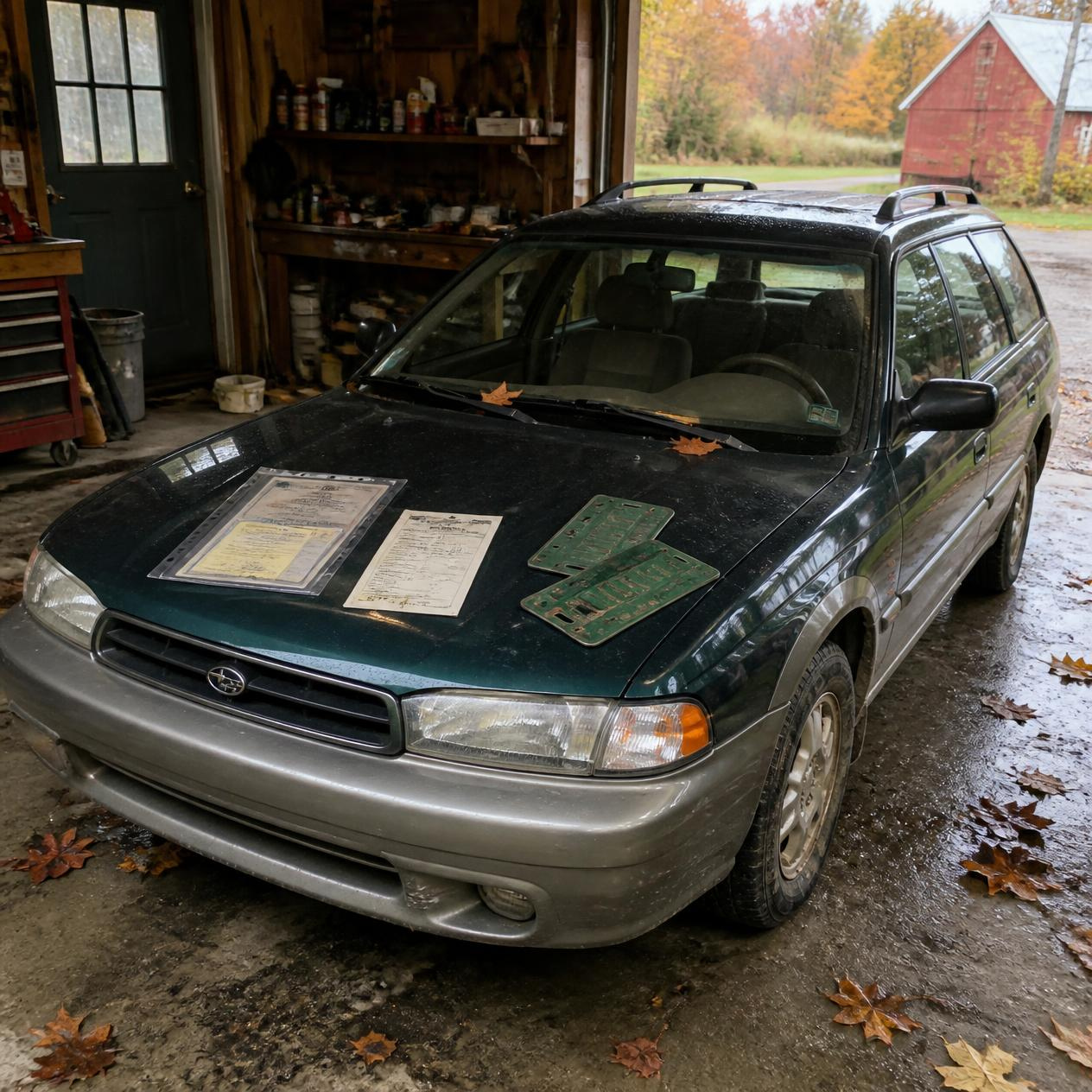
When that vehicle was registered in Vermont before the July 1, 2024 title-law change and no title was required, the seller can still use the Vermont registration certificate as the ownership document. The seller must provide that registration certificate together with a signed bill of sale. The buyer then applies under the current system and receives a title.
Government source: Vermont DMV — Vehicle Title Guide
This older-vehicle rule makes Vermont different from the private-sale process explained in KarKiosk’s Alabama Bill of Sale guide.
Vermont Private Vehicle Sale Rules
Item | Vermont Rule | Why It Matters |
Official bill of sale | VT-005 | Records the transaction and can include odometer disclosure |
Normal used-vehicle ownership document | Properly assigned title | Establishes the ownership chain |
Certain 2009-or-older Vermont vehicles | Prior Vermont registration plus signed bill of sale | Applies to vehicles retained under the pre-2024 non-title system |
Registration/title application | VD-119 | Used to register, title, and calculate tax |
Purchase and Use Tax | 6% | Based on price or J.D. Power clean trade-in value, whichever is greater |
New vehicle title | $42 | Separate from registration charges |
One-year ICE passenger registration | $91 | Current 2026 gas/diesel passenger-car amount |
Registration transfer | $30 | Applies when moving an eligible Vermont registration |
Plates after sale | Seller removes them | Plates belong to the registrant, not the buyer |
Inspection after registration | Within 15 days if not currently Vermont-inspected | Vermont inspection is then required annually |
What VT-005 Records
VT-005 is Vermont’s Bill of Sale and Odometer Disclosure Statement.
It records the vehicle’s:
Year, make, model, body type, and color.
VIN.
Mileage.
New owner and co-owner.
Sale date.
Purchase price.
Seller information and signatures.
Odometer status when disclosure applies.
The form also asks whether the vehicle failed an emissions test and received a time-extension waiver during the previous 12 months.
The title and VT-005 should show the same buyer, vehicle, mileage, and transaction date.

Odometer Disclosure Uses the 20-Year Federal Rule
Vermont requires an odometer disclosure for model-year 2011 and newer vehicles through the first 20 model years.
A model-year 2011 vehicle remains subject to the disclosure requirement through 2030 and becomes exempt in 2031. Model-year 2010 and older vehicles remain under the previous federal exemption framework.
When the title itself contains a conforming odometer statement and it is properly completed, a separate odometer disclosure is not necessary.
VT-005 provides a separate disclosure section when it is needed.
Vermont Purchase and Use Tax Is 6%
The buyer pays 6% Purchase and Use Tax when registering or titling the vehicle.
Vermont calculates the tax using the greater of:
Actual purchase price; or
J.D. Power clean trade-in value.
This means a low price written on a bill of sale does not automatically produce a low tax bill.
When the vehicle’s actual condition makes it worth less than the state valuation, Vermont allows a qualifying Vermont dealer appraisal to support a lower value.
Government source: Vermont DMV — Vehicle Taxation
Example
Assume:
Bill-of-sale price: $8,000.
J.D. Power clean trade-in value: $10,000.
Vermont uses $10,000.
The Purchase and Use Tax is:
$10,000 × 6% = $600
If the purchase price were $12,000 instead, the tax would generally be based on $12,000, producing $720.
Vermont’s 2026 Title and Registration Fees
The standard motor-vehicle title fee is $42. A replacement or corrected motor-vehicle title also costs $42, and each recorded lien costs $14.
Passenger-car registration now varies by powertrain.
For one year:
Gas or diesel: $91.
Plug-in hybrid: $135.50.
Battery electric: $178.
Other fuel: $159.25.
For two years:
Gas or diesel: $167.
Plug-in hybrid: $256.
Battery electric: $341.
Other fuel: $292.25.
Transferring an eligible Vermont car registration costs $30.

Vermont Plates Stay With the Seller
The seller should remove the Vermont plates before the buyer takes the vehicle.
Vermont DMV states directly that a person selling a car should not leave the plates on the vehicle. Plates belong to the registrant rather than the new owner.
The seller does not have to return unused plates to DMV.
An eligible registration can instead be transferred to another vehicle. Vermont charges $30 for a standard car, motorcycle, truck, or trailer registration transfer.
A buyer needs registration and plates in the buyer’s own name before ordinary road use.
KarKiosk’s Alaska Bill of Sale guide covers another state where the seller retains the plates, but Alaska’s title and temporary-use procedures are different.
Newly Registered Vehicles Have a 15-Day Inspection Rule
All vehicles registered in Vermont must undergo a state inspection each year.
A newly registered vehicle that does not already have a current Vermont inspection must be inspected within 15 days after registration.
The inspection fee is not set as one statewide flat passenger-car amount. The inspection station uses its posted hourly or flat rate.
Government source: Vermont DMV — Inspection Stations and Requirements
Vermont updated its Periodic Inspection Manual in July 2026, including revisions affecting brakes, tires, steering, suspension, electrical systems, windows, wipers, and exterior-body inspection procedures.

Vermont Does Not Use a Simple Statewide 30-Day Private-Sale Title Rule
Vermont’s current private-sale guidance focuses on submitting the required ownership documents, VT-005, and VD-119 with tax and fees rather than publishing the same simple 30-day buyer-transfer deadline used by states such as Texas.
The buyer should complete registration promptly because the vehicle cannot simply continue operating under the seller’s plates.
After the new registration is issued, the 15-day Vermont inspection requirement applies when the vehicle does not already have a current Vermont inspection.
What If the Seller Has a 2009-or-Older Vehicle With No Title?
Check whether the seller’s Vermont registration remains the valid ownership document under the pre-July 2024 system.
When it does, the seller gives the buyer:
The Vermont registration certificate.
A signed bill of sale.
The complete chain of ownership when additional transfers occurred.
If NMVTIS shows an active title somewhere else, Vermont can require that prior title. A title-bond process may be necessary when the required ownership document cannot be obtained.
Do not assume that every old car with no title automatically qualifies for the registration-certificate exception.
How to Complete a Vermont Private Vehicle Sale
Verify the seller’s ownership document.
Match the VIN on the vehicle and paperwork.
Obtain releases for all liens.
Assign the title when a title exists.
Complete VT-005.
Complete the odometer disclosure when required.
Remove the seller’s Vermont plates.
Complete VD-119.
Calculate the 6% tax using the required valuation rule.
Pay the title and registration fees.
Complete the Vermont inspection within 15 days after registration when required.
Verify the seller’s ownership document.
Match the VIN on the vehicle and paperwork.
Obtain releases for all liens.
Assign the title when a title exists.
Complete VT-005.
Complete the odometer disclosure when required.
Remove the seller’s Vermont plates.
Complete VD-119.
Calculate the 6% tax using the required valuation rule.
Pay the title and registration fees.
Complete the Vermont inspection within 15 days after registration when required.
Common Vermont Private-Sale Mistakes
Assuming every older Vermont vehicle must already have a title.
Assuming every 2009-or-older vehicle can be sold without checking its ownership record.
Using only the bill-of-sale price to calculate tax.
Leaving the seller’s plates on the vehicle.
Ignoring a prior active title shown in the ownership record.
Omitting odometer disclosure for a covered vehicle.
Missing the 15-day post-registration inspection period.