Seller Guide Oct 19, 2026
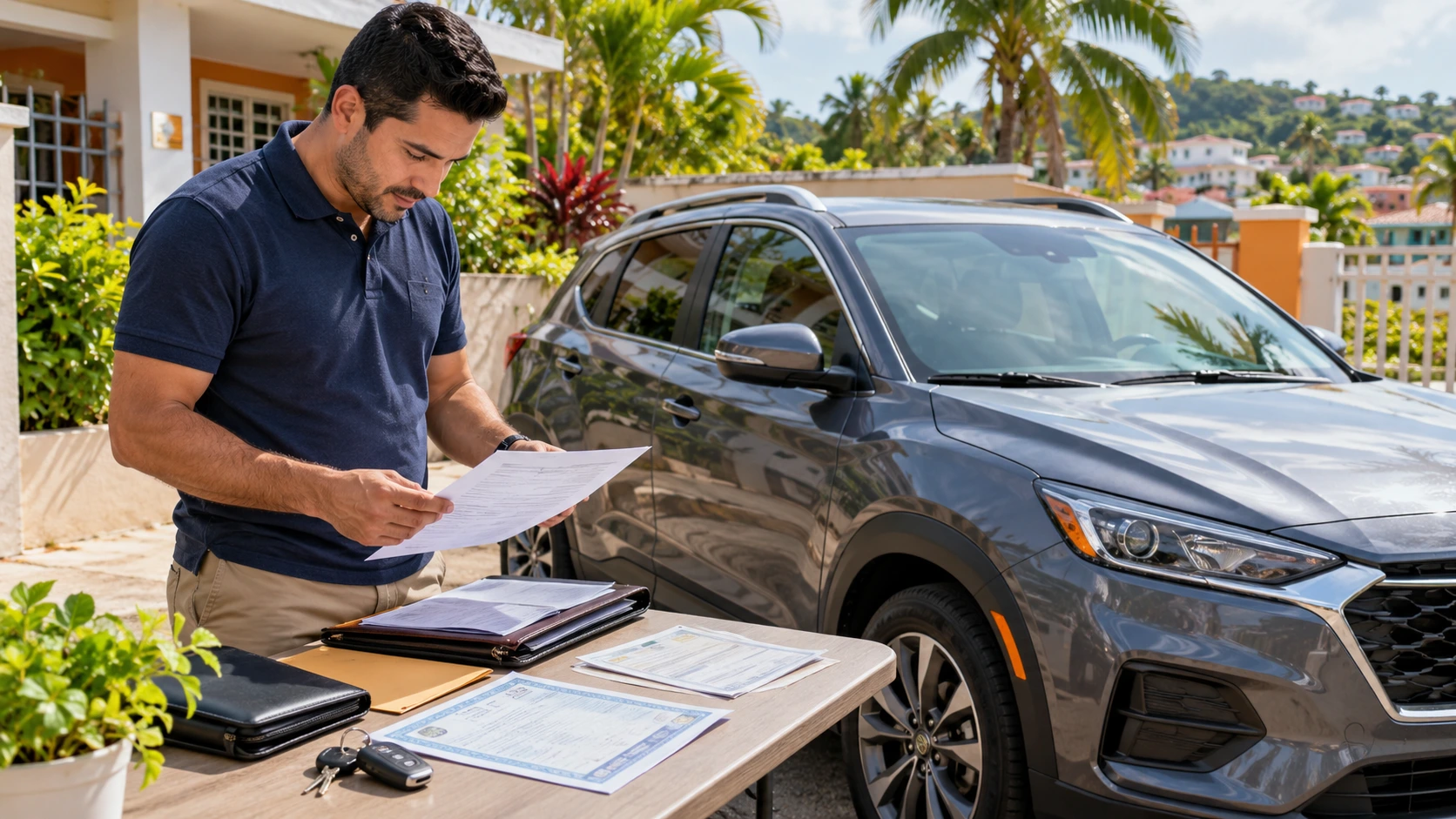
To sell a car privately in Washington, DC, give the buyer a correctly assigned original title, prepare a bill of sale, and remove your license plates before the vehicle leaves. Complete the appropriate tag transfer or cancellation before ending the sold vehicle’s insurance coverage. Agree on payment and the buyer’s transportation before the handover.
Make the Title Ready Before You Accept a Deposit
Check that the title names you as an owner and that its vehicle identification number, or VIN, matches the car. If the title lists several owners, DC DMV requires all of them to sign the vehicle over. Arrange those signatures before promising an immediate sale.
If a lender still has an interest in the car, ask for a payoff amount and written instructions for releasing the title. Explain that process to the buyer. A loan payment receipt alone may not provide the title documents needed to finish the transfer.
Replace a missing title early. DC DMV says duplicate titles are mailed to the primary owner within 10 business days of processing, and titles are not issued over the counter. Allow time for processing and delivery before setting a firm collection date.
Prepare a Sale File That Both Parties Can Check
Keep the ownership documents separate from your service history. That makes it easier to check the legal paperwork without searching through repair invoices.
Document or record | What the seller should prepare | Why it matters |
Original vehicle title | Correct ownership details and all required seller signatures | Allows the buyer to apply for a title |
Lien-release evidence, if applicable | The lender’s accepted release or payoff documentation | Addresses the lender’s recorded interest |
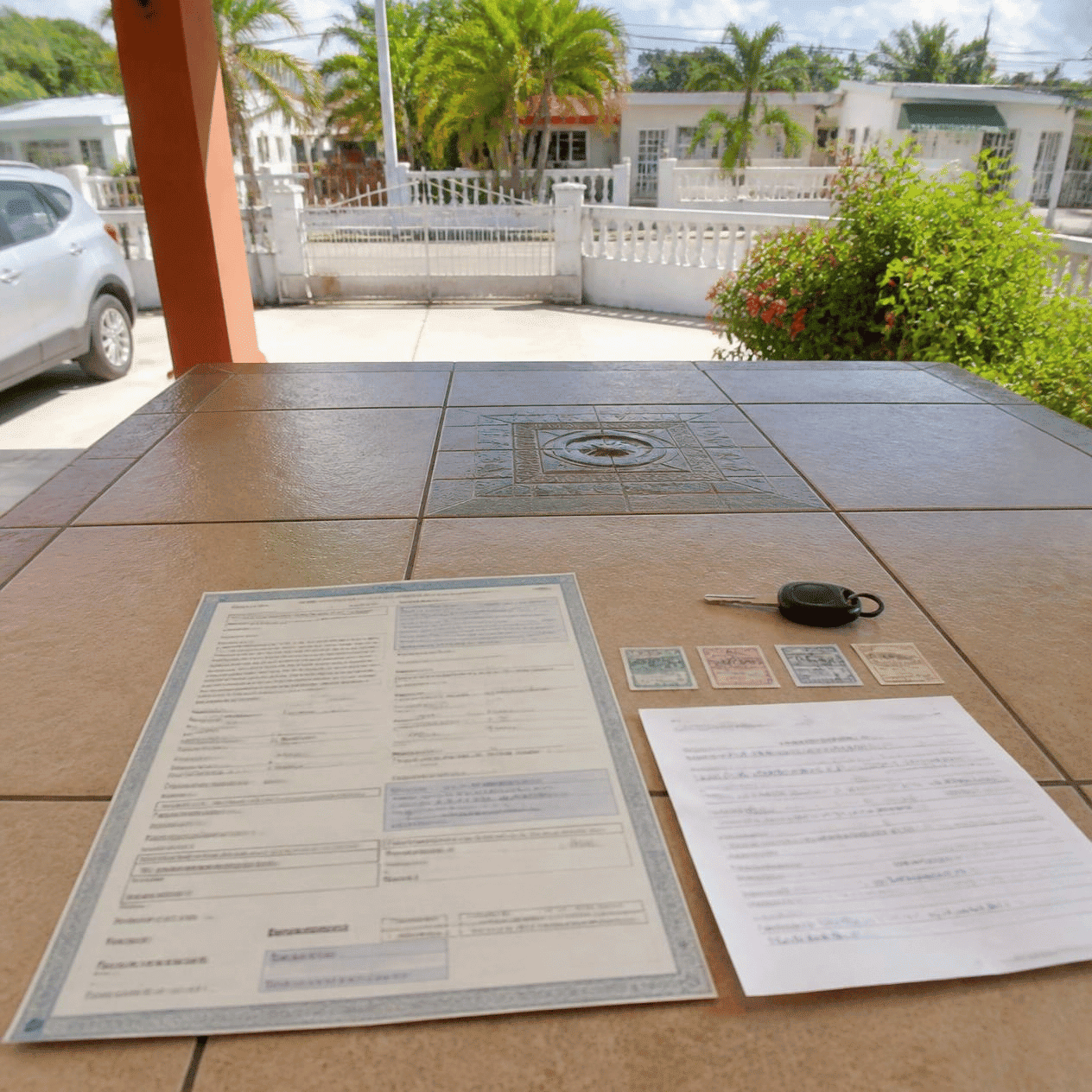
Bill of sale | Vehicle details, parties, actual price, sale date, and signatures | Records the agreement and supports the buyer’s title application |
Odometer information | The reading and required disclosure completed accurately | Documents mileage at the transfer |
Maintenance and repair records | Relevant invoices with private information removed | Helps explain the car’s condition and history |
DC DMV lists a car bill of sale among the documents for obtaining a new title. Prepare one even if the price also appears on the title. KarKiosk’s Washington, DC bill of sale guide can help you organize the transaction record.
Include any agreed repair terms, accessories, extra keys, and collection arrangements in the written agreement. Give each party a copy. The bill of sale supports the ownership transfer; the original title still needs to be properly assigned.
Give Buyers a Price and Condition They Can Evaluate
Compare your car with similar vehicles offered on KarKiosk. Look at the same model year, trim, mileage range, and general condition. Treat advertised prices as asking prices, then decide how your car’s repair needs and service history affect your own asking price.
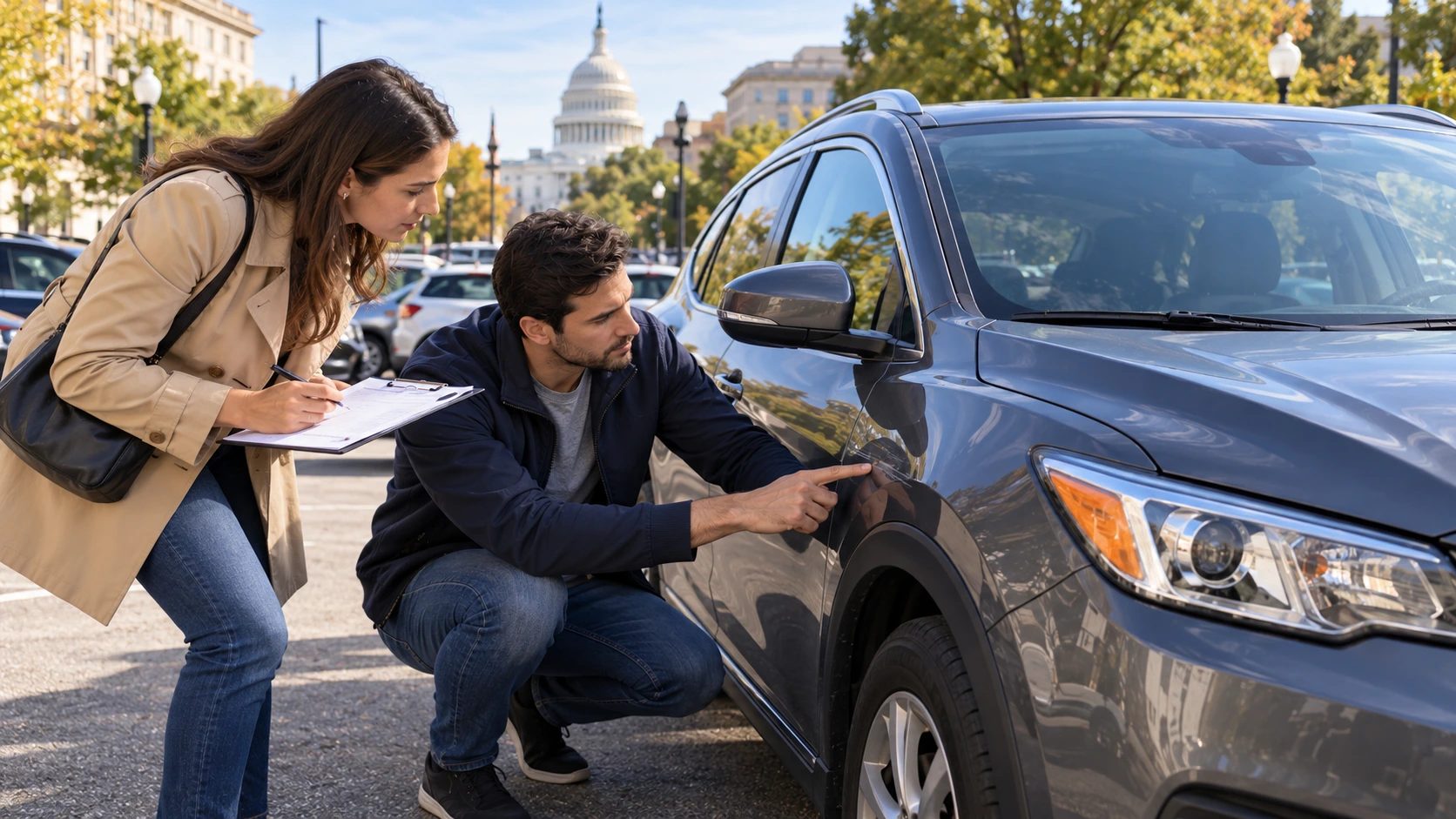
Clean the vehicle before taking photographs. Show the exterior from several angles, the interior, cargo space, tires, dashboard, and visible damage. A close photograph of a scratched bumper gives buyers more useful information than a description that only says the car is in good condition.
Write a listing that answers practical questions. State the mileage, title status, known mechanical problems, recent work, and whether there is an outstanding loan. Describe what you know, and avoid claiming an accident-free history when you cannot support it.
Record Mileage Under the Correct Age Rule
For ordinary passenger cars, the federal odometer disclosure period is 20 years for model year 2011 and newer vehicles. A 2011 vehicle does not become age-exempt until 2031. Model year 2010 and older vehicles follow the earlier exemption rule.
Check the actual reading when completing the sale documents. If you know the displayed mileage is inaccurate, use the appropriate disclosure instead of certifying it as actual mileage.
NHTSA’s longstanding national estimate exceeds 450,000 vehicle sales with false odometer readings each year. Keep dated maintenance records that show mileage so buyers can follow your car’s history.
Arrange the Inspection and Payment Before Meeting
Choose a busy, well-lit location and tell someone you trust about the appointment. Check the prospective driver’s license and confirm with your insurer how a test drive is covered before handing over the keys. Agree on the route and duration in advance.
If the buyer wants an independent inspection, agree on the workshop, appointment, and who will pay. Share known issues before that inspection. An unexpected repair finding is easier to discuss when your listing already describes the car honestly.
Set the payment method before the final meeting. Contact your bank through a trusted channel to understand how the proposed payment will be verified. A payment screenshot or an apparent deposit should not be your only proof that the money is genuine.
The Federal Trade Commission warns that fake checks can appear in an account before the bank discovers the fraud. Reject an overpayment followed by a request to send money back or pay a transport company on the buyer’s behalf.
For example, if you agree on $12,000 and receive a $14,000 check with instructions to forward $2,000, stop the transaction and contact your bank. Keep control of the vehicle, keys, and unsigned transfer documents until the payment arrangements are verified.
Complete the Title Carefully at the Handover
Review the buyer’s identity and complete the assignment using the actual buyer’s information. Enter the required transaction details, mileage disclosure, and signatures in the correct places. Leave no buyer field blank for someone else to complete later.
Check every entry before signing. DC DMV does not accept altered titles, so ask DMV how to correct a mistake instead of crossing out important information or using correction fluid.
Coordinate the exchange of payment, signed documents, keys, and possession. Keep a clear copy of the completed title assignment and bill of sale, along with a record of the handover date and time.
Plan How the Buyer Will Take the Car Home
The buyer needs suitable insurance and lawful transportation arrangements. Confirm that plan before collection day, especially when the buyer lives in Maryland, Virginia, or another jurisdiction.
DC DMV offers a 45-day temporary registration for District residents who need an inspection before full registration. It also describes a five-day temporary paper tag for out-of-state residents who buy a used vehicle in DC from an individual owner. These are separate programs with their own requirements, and DMV does not offer extensions.
Ask the buyer to confirm the applicable process with DMV or arrange transport. The buyer should also budget separately for the title, registration, and applicable taxes. KarKiosk’s Washington, DC buyer guide explains those preparations.
Remove Your Plates and Close the Registration Before Ending Coverage
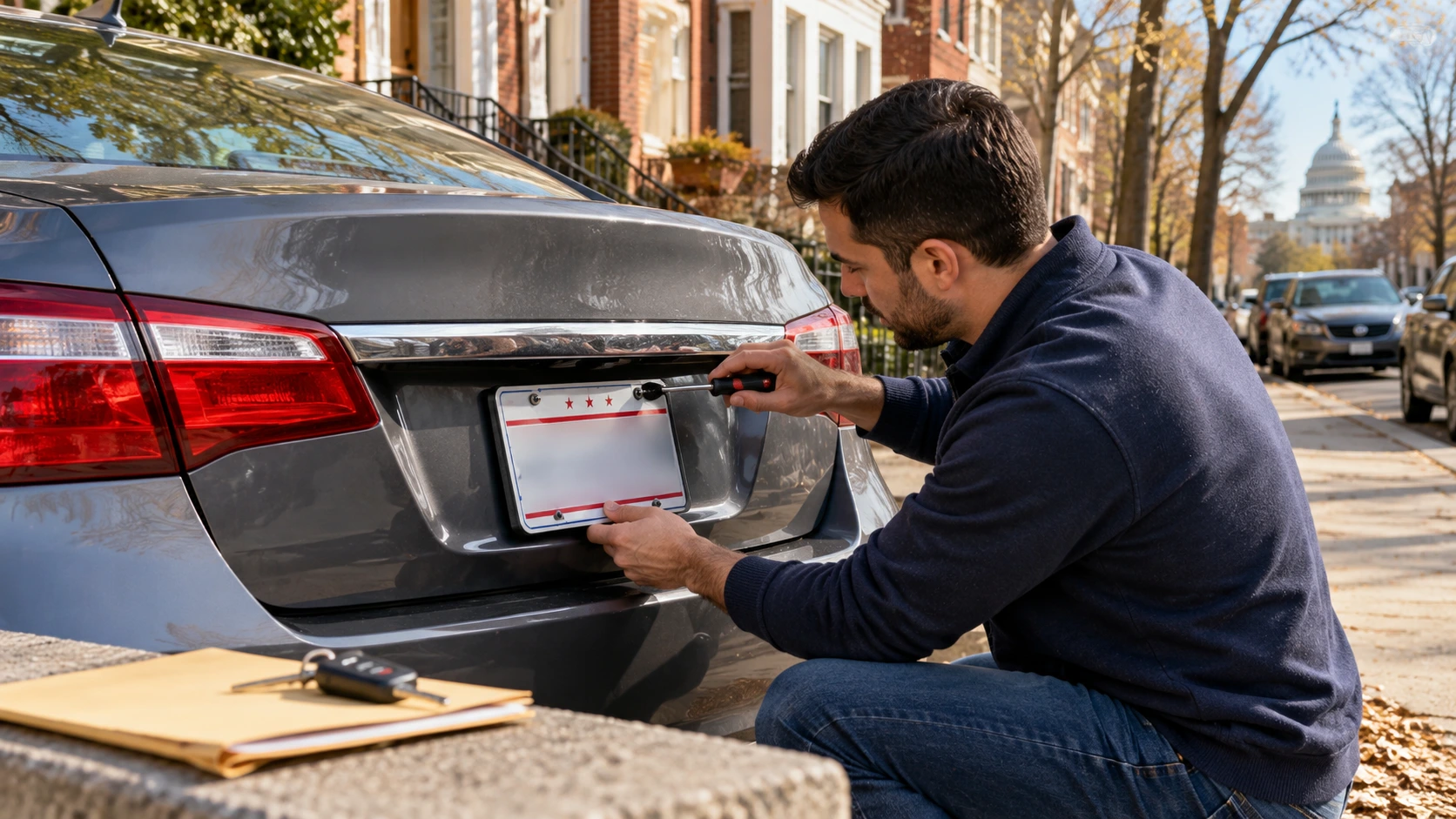
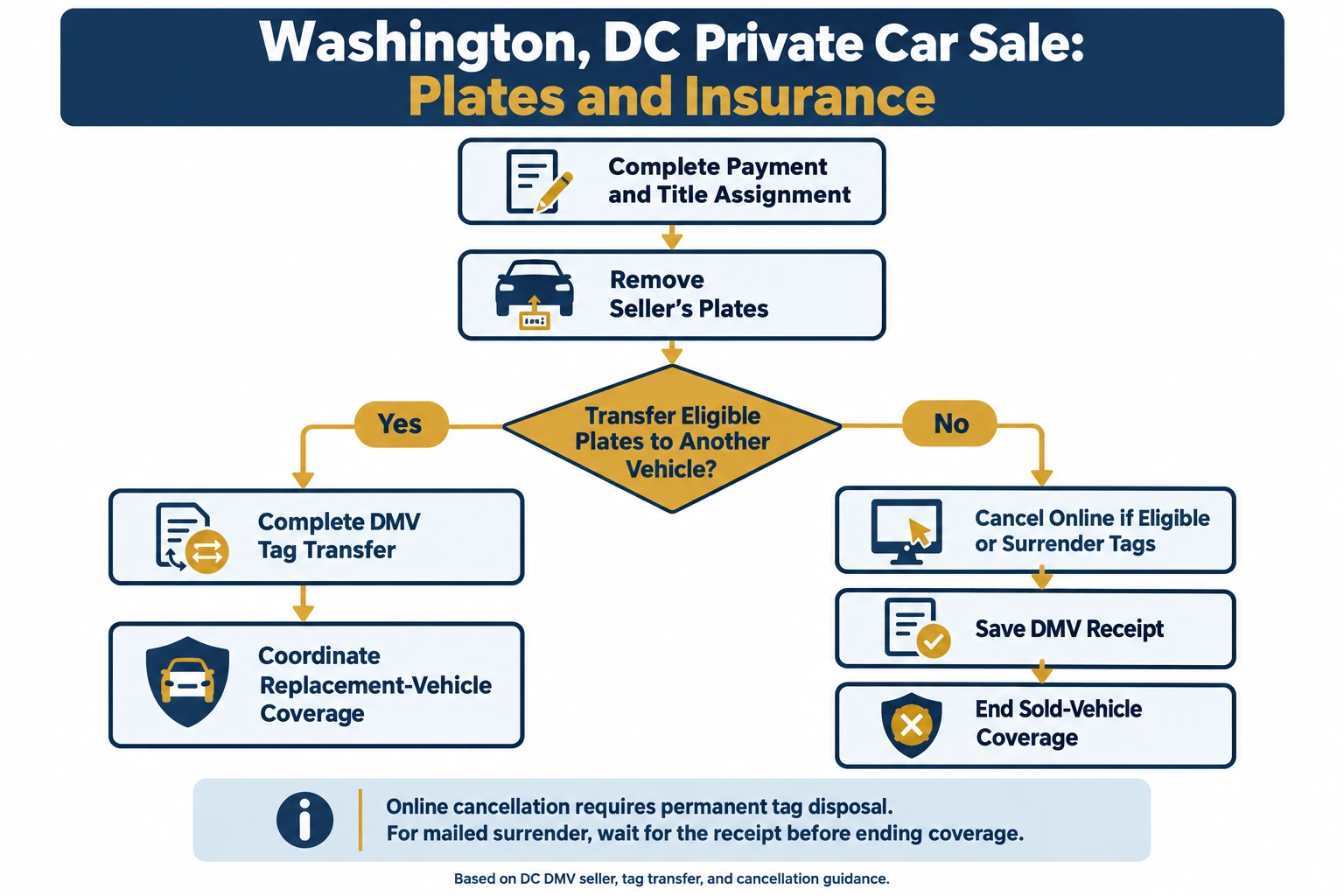
Remove your DC plates before the buyer takes possession. DC DMV warns that traffic violations can remain associated with you while your tags remain on the vehicle.
The agency’s seller guidance states:
“Do not cancel your insurance before surrendering your tags to DC DMV.”
If You Are Transferring the Plates
DC allows valid tags to transfer between vehicles with the same owner and vehicle class. Complete the DMV transfer and coordinate the insurance change for the replacement vehicle. Expired or surrendered tags cannot be transferred.
If You Are Canceling the Registration
The primary owner of an individually registered vehicle can use DC’s online tag-cancellation process. Save the confirmation receipt. Follow DMV’s disposal instructions, including permanently marking through the tag number before disposal or recycling.
If online cancellation is unavailable, surrender the tags through the applicable mail or in-person process. For mailed tags, wait for the surrender receipt before ending coverage. DMV says to allow up to 15 business days to receive that receipt before contacting the agency.
Remove the vehicle’s DC registration sticker after canceling the tags. Use the receipt when arranging the insurance change, and retain it with your sale records. If your policy covers several vehicles, identify the sold car when speaking with the insurer.
Keep the Records and Remove Your Personal Data
Save the bill of sale, completed title copy, payment record, lien-release documents, and DMV confirmation together. Those records give you a dated account of the transaction if a question arises later.
Remove saved navigation addresses, paired phones, garage-door settings, personal belongings, and access through connected-car accounts. Deal with any toll account or parking service linked to the vehicle. Mark your KarKiosk listing as sold when the transaction is complete.