
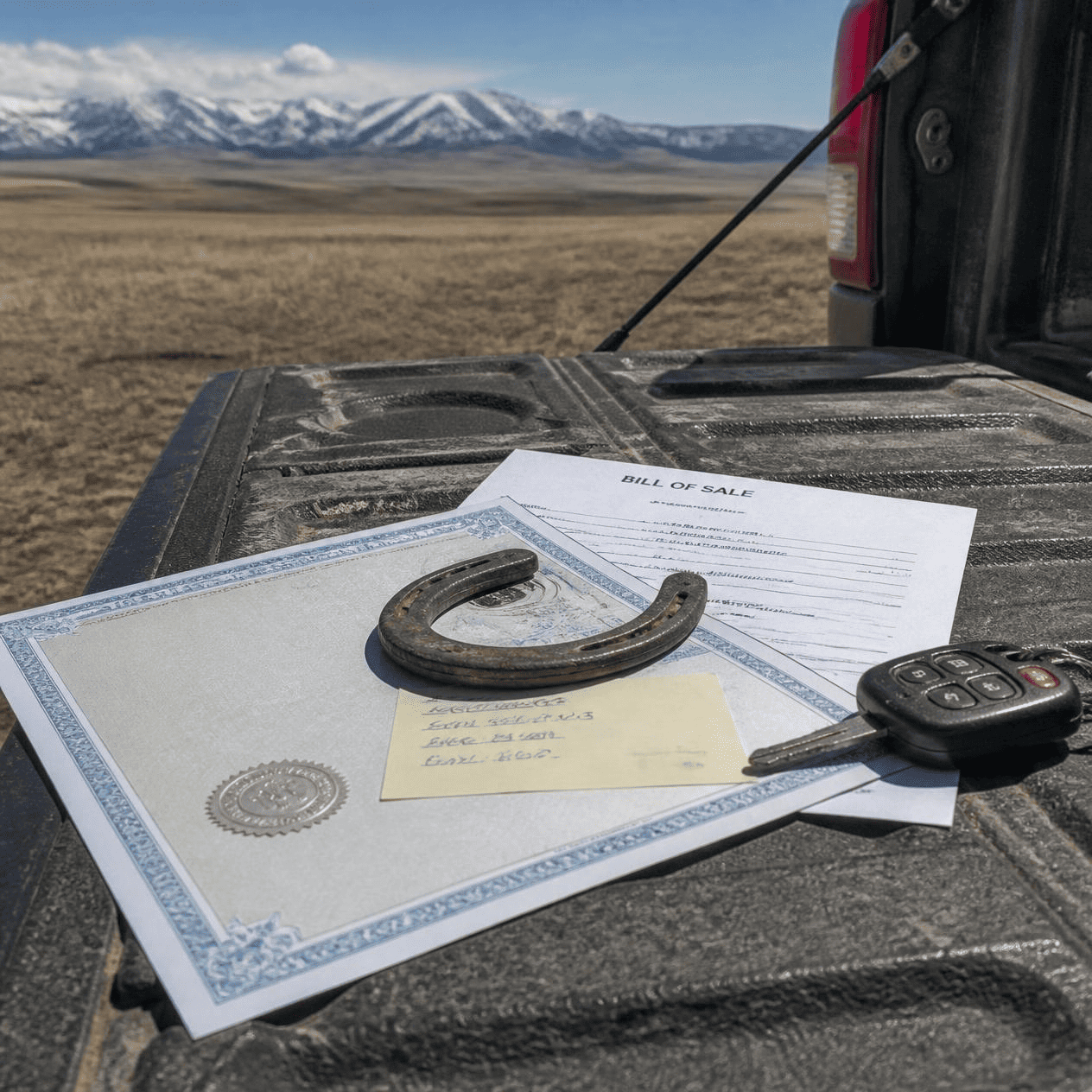
Bill of Sale Sep 21, 2026
Wisconsin does not require one mandatory state bill-of-sale form for an ordinary private vehicle sale. The seller completes the original title and can create a separate bill of sale for transaction records, while the seller must also notify WisDOT of the sale within 30 days.
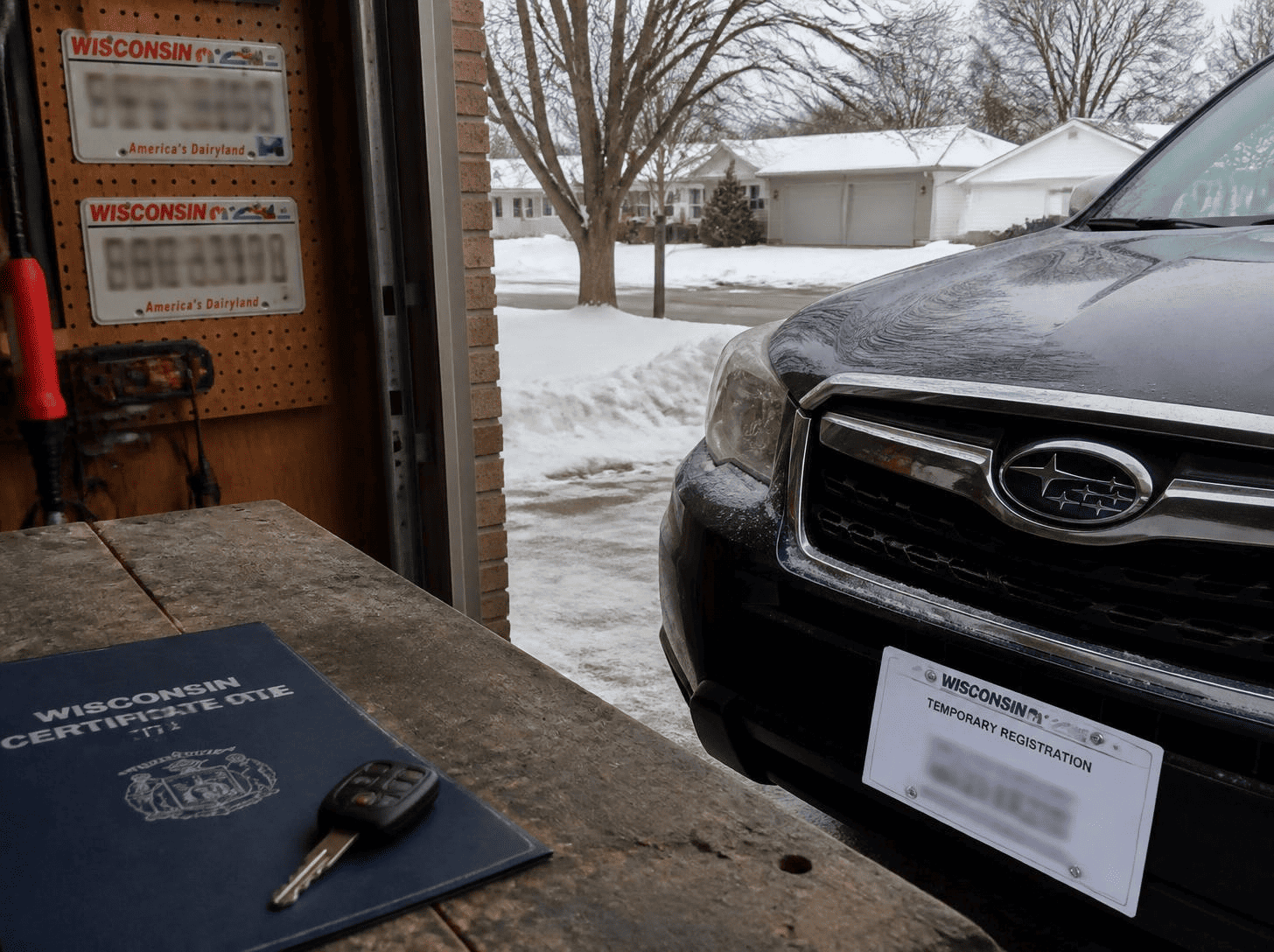
If the buyer intends to operate the vehicle, Wisconsin says it should be titled and registered within two business days after purchase, and valid Wisconsin plates or a temporary plate must be displayed.
Download the free KarKiosk vehicle bill of sale PDF before the car changes hands. It gives the buyer and seller a signed record of the VIN, mileage, purchase price, payment, and sale date to keep with the Wisconsin title.
Wisconsin Does Not Require a Standard Bill of Sale Form
The Wisconsin title remains the primary ownership document.
The seller completes the back of the title with:
Seller signature and date.
Buyer’s name and address.
Sale price.
Odometer reading.
Brand disclosure when applicable.
WisDOT says sellers may create their own bill of sale and keep copies for both parties.
A useful Wisconsin private-sale record should include:
Vehicle make, year, and model.
VIN.
Odometer reading.
Buyer’s name, address, and telephone number.
Seller’s name, address, and telephone number.
Purchase price.
Sale date.
Buyer and seller signatures.
The full state instructions are available from Wisconsin DMV — Selling Your Vehicle.
A bill of sale does not correct an open title or allow someone who never titled the vehicle in their own name to sell it legally.
Wisconsin specifically states that a vehicle must first be titled in the seller’s name before the seller can privately sell it.
For a state with a formal government private-sale bill, compare KarKiosk’s North Dakota Bill of Sale guide.
Wisconsin Private Vehicle Sale Rules
Item | Wisconsin Rule | Why It Matters |
Mandatory state bill-of-sale form | No | Parties can create their own transaction record |
Main ownership document | Properly assigned original title | Transfers the ownership interest |
Buyer operating deadline | Title/register within 2 business days | Required when the vehicle will be operated |
Seller notification | Within 30 days | Separately reports the private sale to WisDOT |
State sales/use tax | 5% | County and city tax may also apply |
Title transfer fee | $214.50 | Current original/transfer title charge |
Automobile registration | $85 annually | Wheel tax and fuel surcharges can be additional |
Hybrid surcharge | $75 annually | Added to normal registration |
Electric vehicle surcharge | $175 annually | Added to normal registration |
Automobile plates | Stay with seller | Buyer does not inherit seller’s plates |
Emissions test | Seven southeastern counties | A purchase can trigger testing within 45 days |
The Buyer Has a Two-Business-Day Operating Rule
Wisconsin’s private-sale timetable is unusual.
WisDOT states that when the vehicle will be operated, the buyer should title and register it within two business days after purchase.
The buyer must display:
Wisconsin license plates; or
An authorized temporary plate.
The two-day rule is tied to operating the vehicle. It should not be confused with the seller’s separate 30-day reporting requirement.
A buyer can use Wisconsin’s eMV Public system for eligible title and registration transactions.
The Seller Has 30 Days to Notify WisDOT
Anyone who sells a motor vehicle from one individual to another must submit seller notification to Wisconsin DMV within 30 days.
The seller reports:
VIN.
Buyer’s identity.
Sale price.
Date of sale.
Seller notification does not replace the signed title.
The buyer still has to complete the ownership transfer.
The seller should retain the submission confirmation with:
Copy of the bill of sale.
Payment record.
Buyer contact details.
Photograph or copy of the completed title assignment.
Rhode Island follows a substantially different buyer process involving a required bill of sale, title evidence, tax documentation, and a short inspection deadline. See KarKiosk’s Rhode Island Bill of Sale guide.
Wisconsin State Tax Starts at 5%
Wisconsin’s state sales and use tax rate is 5%.
For a private-party vehicle sale, the seller normally does not collect Wisconsin vehicle sales tax. The buyer pays applicable state, county, and city sales or use tax when the vehicle is titled or registered.
The local tax depends on where the vehicle will normally be kept rather than simply where the buyer and seller meet.
Official tax guidance: Wisconsin Department of Revenue — Used Motor Vehicle Sales Tax.
Example
Assume the vehicle purchase price is $15,000.
The basic Wisconsin state tax is:
$15,000 × 5% = $750
Applicable county or city tax is added separately.
The buyer should therefore confirm the rate for the vehicle’s customary location before calculating the complete tax.
Do Not Understate the Purchase Price
Wisconsin’s title application specifically warns that understating the vehicle purchase price is a crime.
WisDOT also states that the Department of Revenue reviews titles and investigates suspiciously low sale prices.
Record the actual transaction price on:
Title.
Bill of sale.
MV1 or electronic application.
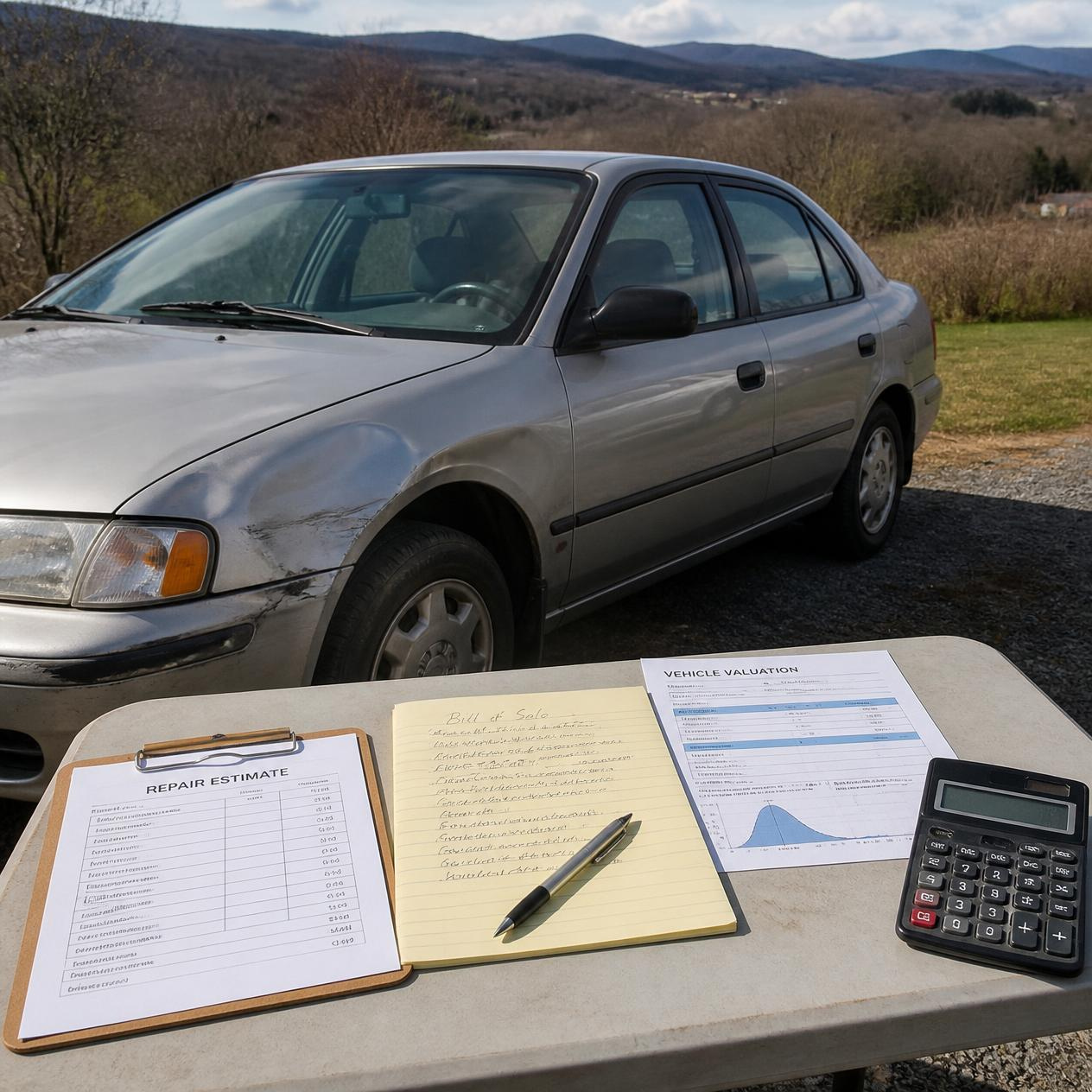
Keep repair estimates and photographs when significant damage explains an unusually low price.
Wisconsin’s Title Fee Is Now $214.50
Wisconsin’s current original or transfer title fee is $214.50.
The standard annual automobile registration fee is $85.
Other common costs include:
$10 new lien filing.
$6 plate issuance fee per standard plate.
Applicable municipal or county wheel tax.
$75 annual hybrid-electric surcharge.
$175 annual electric-vehicle surcharge.
These costs are separate from sales and use tax.

Wisconsin Plates Stay With the Seller
Standard automobile and light-truck plates remain with the previous owner after a sale.
WisDOT expressly warns sellers not to leave plates on an automobile or light truck weighing 8,000 pounds or less.
The seller can:
Transfer eligible plates to another vehicle.
Destroy them if they will not be reused.
The seller generally does not return ordinary unused plates to DMV.
The buyer must arrange the buyer’s own Wisconsin plate or temporary registration before normal operation.

Emissions Testing Applies in Seven Counties
Wisconsin’s emissions program applies to qualifying vehicles customarily kept in:
Kenosha County.
Milwaukee County.
Ozaukee County.
Racine County.
Sheboygan County.
Washington County.
Waukesha County.
A test can be required when a vehicle is purchased and registered, and WisDOT says the test must then be completed within 45 days when the vehicle falls under the program.
The program covers specified gasoline, hybrid, natural-gas, and diesel vehicles according to model year and GVWR.
Current testing information: Wisconsin DMV — Emission Test.

Odometer Disclosure Still Applies to Newer Vehicles
Wisconsin requires odometer disclosure during ownership transfers unless the vehicle qualifies for an exemption.
Current rules exempt:
Model-year 2010 and older vehicles.
Model-year 2011 and newer vehicles after reaching the applicable 20-year disclosure age.
Vehicles over 16,000 pounds GVWR.
Mopeds.
The seller normally completes the disclosure directly on the title.
Family and Gift Transfers Can Have Tax Exemptions
Wisconsin recognizes several tax-exempt ownership transfers.
Examples can include qualifying transfers involving:
Spouse.
Parent.
Child.
Stepparent.
Stepchild.
Certain parents-in-law.
Genuine gifts.
Even trades with no money exchanged.
Family-transfer exemptions through eMV Public generally require a current Wisconsin title.
Do not use a family exemption when the transaction is actually a taxable sale.
What If the Title Is Missing?
The seller must obtain a replacement title before transferring the vehicle.
WisDOT specifically says that even if the seller later finds the original after applying for a replacement, the original should be destroyed and the replacement title used for the transfer.
The current replacement-title fee is $20.
A handwritten bill of sale does not substitute for an unavailable title in a normal Wisconsin private sale.
How to Complete a Wisconsin Private Vehicle Sale
Confirm that the seller is named on the Wisconsin title.
Check the VIN on the title against the vehicle.
Resolve any lien.
Complete the title assignment and mileage disclosure.
Complete a separate bill of sale.
Have the seller remove the plates.
If the vehicle will be driven, title/register it within two business days.
Have the seller report the sale within 30 days.
Pay applicable state and local tax.
Complete emissions testing within 45 days when the vehicle and county require it.
Confirm that the seller is named on the Wisconsin title.
Check the VIN on the title against the vehicle.
Resolve any lien.
Complete the title assignment and mileage disclosure.
Complete a separate bill of sale.
Have the seller remove the plates.
If the vehicle will be driven, title/register it within two business days.
Have the seller report the sale within 30 days.
Pay applicable state and local tax.
Complete emissions testing within 45 days when the vehicle and county require it.
Common Wisconsin Private-Sale Mistakes
Treating a handwritten bill of sale as a substitute for the title.
Buying from someone who never titled the vehicle in their name.
Leaving the seller’s plates on the car.
Missing the two-business-day operating requirement.
Forgetting the seller’s 30-day DMV notification.
Underreporting the purchase price.
Ignoring municipal or county vehicle taxes and wheel taxes.
Missing an emissions test in the seven covered counties.