
Bill of Sale Sep 18, 2026
Washington requires the buyer and seller to complete a bill of sale unless the vehicle’s sale price and sale date are already recorded on the title. The bill of sale supports the transaction, but it does not transfer ownership and it does not replace the seller’s separate Report of Sale.
The seller must report the sale within 5 business days, while the buyer must transfer the title within 15 calendar days to avoid late-transfer penalties.
Download the free KarKiosk vehicle bill of sale PDF before payment and vehicle handover. It gives both parties a signed record of the VIN, mileage, sale price, buyer, seller, and exact transfer date to keep with the Washington title documents.
Washington Uses Three Different Sale Records
A Washington private sale can involve three documents with different purposes.
The Vehicle/Vessel Bill of Sale records the transaction between buyer and seller.
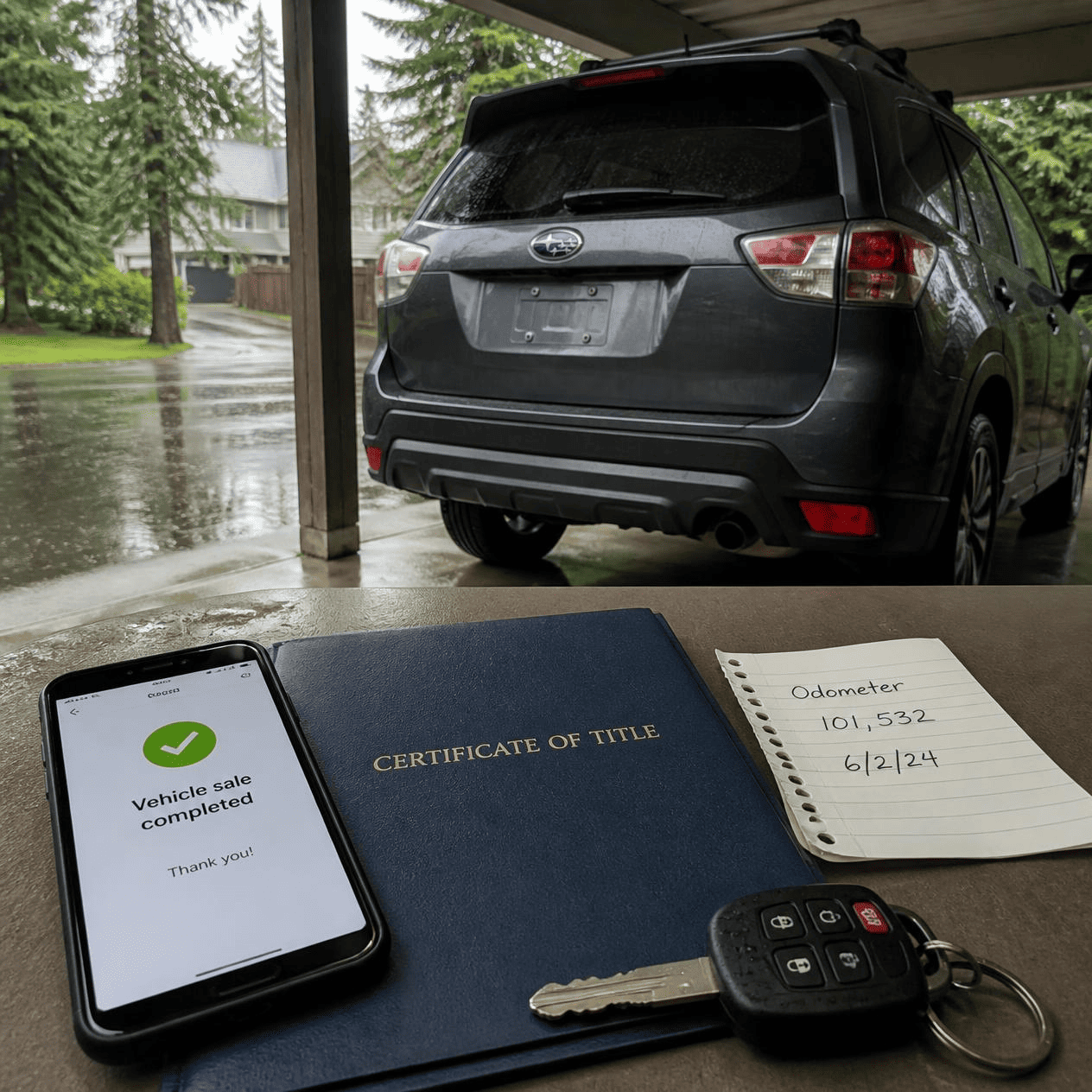
The Certificate of Title transfers the seller’s ownership interest.
The Vehicle Report of Sale tells the Department of Licensing that the seller no longer possesses the vehicle.
Completing one does not automatically complete the others.
Washington DOL states that both parties need to sign a bill of sale before the buyer applies for title unless the sale price and date are already recorded on the title. Each party should keep a copy.
Official private-sale instructions: Washington DOL — Sell a Vehicle
Washington Private Vehicle Sale Rules
Item | Washington Rule | Why It Matters |
Bill of sale | Required unless price and sale date appear on title | Records the transaction |
Main ownership document | Properly released title | Transfers legal ownership |
Seller Report of Sale | Within 5 business days | Helps end seller liability |
Buyer title transfer | Within 15 calendar days | Late fee begins on day 16 |
Late title fee | $50 on day 16, then $2 per day | Maximum late fee is $125 |
Title application fee | $15 | Separate filing and service fees can apply |
Registration starting point | $43.25 before variable charges | Weight, location, taxes, and other fees affect total |
Private-party tax | Washington use tax | Generally based on fair market value |
Plates | Seller removes them | Buyer must obtain legal operating authority |
Trip permit | $36 for 3 consecutive days | Useful when driving without a plate |
Emissions test | No longer required | State program ended January 1, 2020 |
The Seller Has 5 Business Days
The seller files a Vehicle Report of Sale within five business days after selling, trading, gifting, donating, or otherwise transferring the vehicle.
The report should identify:
Vehicle plate number.
VIN.
Model year.
Make and model.
Title number.
Sale date.
Sale price or gift status.
Seller information.
Buyer information.
The report does not transfer ownership.
It documents that the vehicle left the seller’s possession and can protect the former owner from towing charges, abandoned-vehicle costs, and certain liabilities generated by the buyer.
The seller should retain the confirmation.
This reporting process is different from Missouri’s system, where the seller has a longer reporting period and can use the state’s own transaction forms. See KarKiosk’s Missouri Bill of Sale guide.
The Buyer Has 15 Calendar Days
The buyer must apply for the new title within 15 calendar days after purchase.
The buyer normally brings or submits:
Properly released title.
Bill of sale when required.
Vehicle Title Application.
Odometer disclosure when applicable.
Identification.
Required tax.
Title and registration fees.
Washington does not give the buyer a full month.
The late-transfer penalty starts immediately after the 15-day period.
Day 16 Starts at $50
The late title-transfer fee is:
$50 on the 16th day.
Another $2 for each additional day.
Maximum $125.
This makes the 15-day deadline one of the more important dates in a Washington private vehicle sale.

Washington Private Sales Are Subject to Use Tax
A vehicle purchased from a private individual is generally subject to Washington use tax when the buyer transfers the title.
The state calculates vehicle use tax using the vehicle’s fair market value.
The tax rate combines:
The applicable sales-tax rate at the buyer’s address.
An additional 0.3% motor vehicle sales and use tax.
Official tax explanation: Washington DOL — Vehicle Use Tax
Washington therefore does not have one simple statewide private-car tax percentage that applies to every buyer.
The final rate depends on the buyer’s location.
A Low Bill-of-Sale Price May Not Control the Tax
Washington uses vehicle market data to determine fair market value.
DOL may accept the actual purchase price when:
Fair market value is below $7,500; or
The purchase price is within 20% of fair market value.
When the difference is larger, the buyer can be asked to document why the vehicle sold for less.
The state can require a Declaration of Buyer and Seller Regarding Value of Used Vehicle Sold, showing:
Selling price.
Vehicle condition.
Buyer and seller certification.
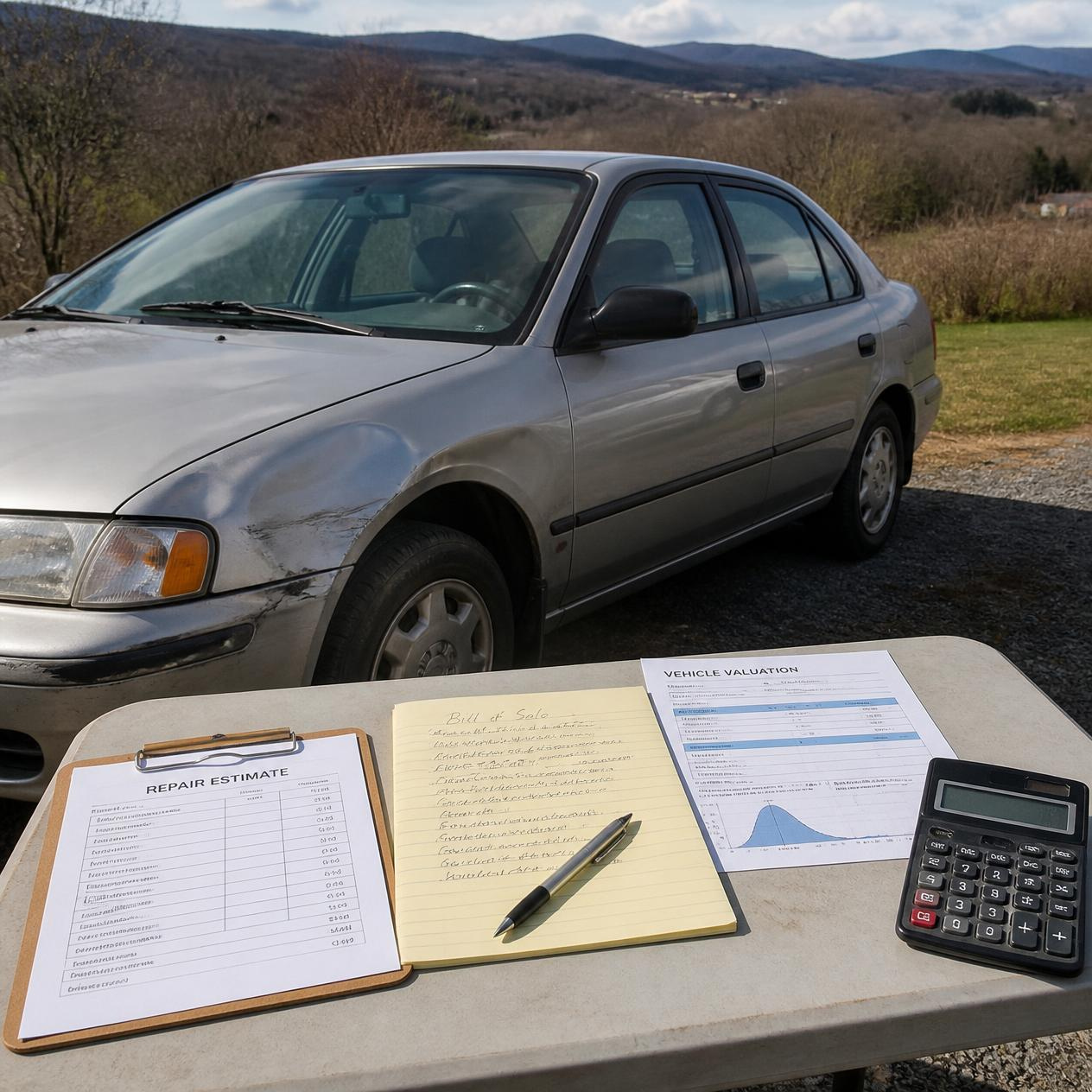
Keep repair estimates and photographs when serious mechanical or body damage explains a low price.
Do not enter a false sale price simply to reduce tax.
For comparison, KarKiosk’s Nebraska Bill of Sale guide explains Nebraska’s separate 5.5% state sales-and-use-tax system and 30-day transfer deadline.

Washington Title and Registration Costs Vary
The basic title application fee is $15.
Washington DOL states that vehicle tab fees start at $43.25, but the final registration cost varies with:
Vehicle weight.
Registration location.
Local transportation charges.
RTA tax when applicable.
Filing fees.
Service fees.
Vehicle-specific fees.
A title-and-registration transaction can also include a $12.50 filing fee and a $29 service fee depending on the transaction structure.
Do not calculate the entire transaction from the $15 title fee alone.
The Seller Removes the Washington Plates
Washington’s official bill-of-sale instructions tell the seller to remove the license plates at the time of sale.
The buyer should not simply continue driving on plates registered to the former owner.
If the buyer will leave the sale without plates, Washington advises buying a trip permit before meeting the seller.
The permit:
Costs $36.
Is valid for three consecutive days.
Must be purchased in person.
Can be used on an otherwise unlicensed qualifying vehicle.
Is limited to three permits for one vehicle during a 30-day period.

The Bill of Sale Does Not Need Standard Notarization
Washington’s standard Vehicle/Vessel Bill of Sale contains buyer and seller signatures but no general notarial certificate.
The ownership release is a different issue.
When the seller uses a separate Release of Interest form, registered-owner signatures must be notarized or certified. A Washington vehicle licensing agent can certify the signatures when they are signed in front of the agent.
Do not assume that the signature requirements for a bill of sale and the title-release documents are identical.
Odometer Disclosure Applies for 20 Years
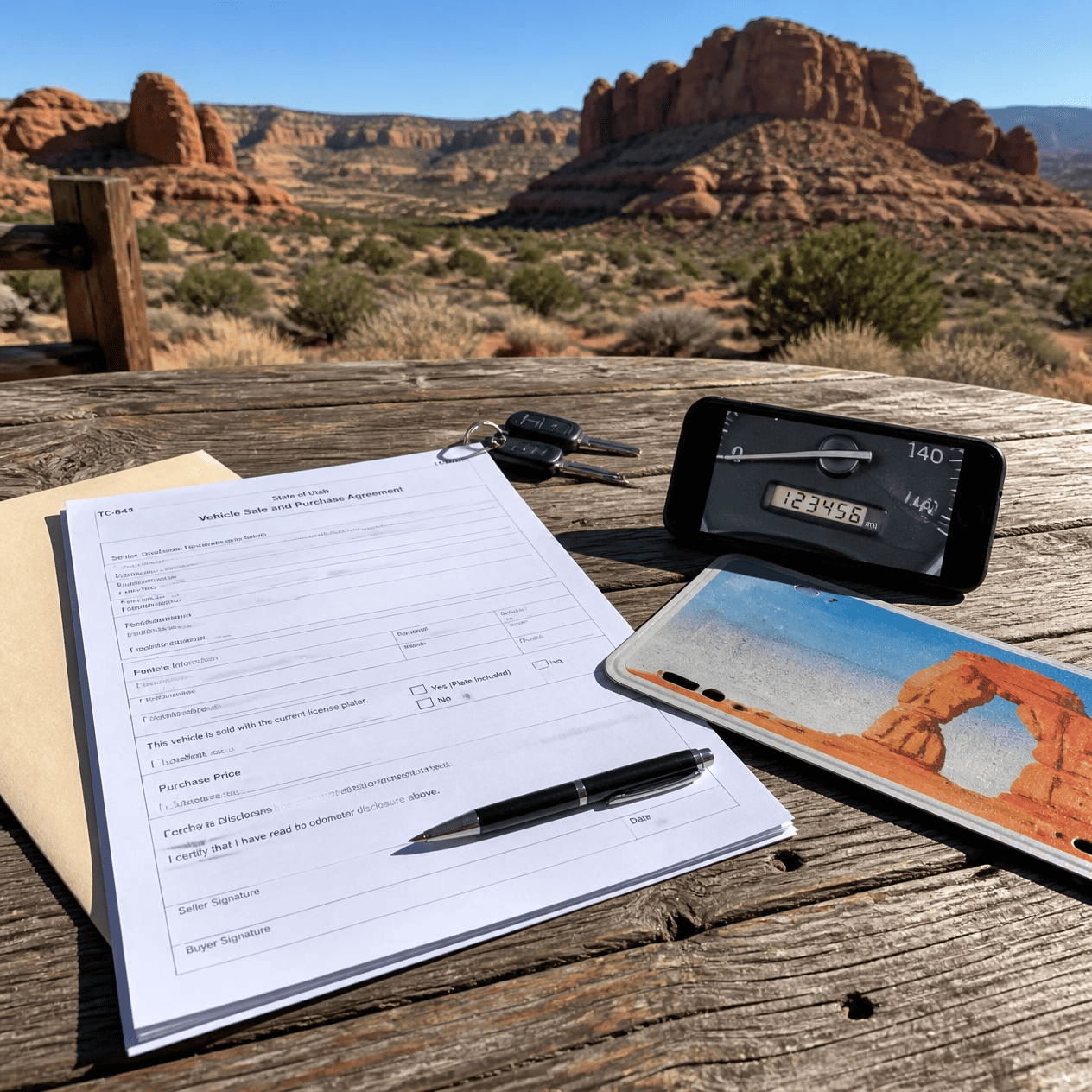
Washington requires an Odometer Disclosure Statement when transferring a motor vehicle that is 20 years old or newer, unless another exemption applies.
The buyer and seller should make sure the mileage reported on the transaction documents agrees with the vehicle.
Do not alter an odometer disclosure after signing it.
Washington No Longer Requires Emissions Testing
Washington ended its statewide vehicle emission check program on January 1, 2020.
A vehicle owner no longer needs an emissions test before renewing Washington registration.
Official confirmation: Washington Department of Ecology — Emission Check Program Ended
The end of periodic testing does not legalize tampering with emissions-control equipment.
Washington still prohibits operation of vehicles with unlawfully modified emissions systems or excessive smoke.
What If the Title Is Missing?
Washington requires a valid ownership path before an ordinary private sale.
A seller who lost the title can use the state’s replacement-title process. DOL currently states that a replacement title can take approximately 4–8 weeks, while an eligible quick title may be available for an additional cost.
An Affidavit of Loss/Release of Interest can also be accepted in appropriate transactions. All registered and legal owners shown in the record must properly release their interests.
A bill of sale alone does not erase a lien or unexplained ownership problem.
How to Complete a Washington Private Sale
Verify that the seller owns the vehicle.
Compare the VIN with the ownership document.
Resolve every lien.
Complete the title release.
Complete a bill of sale unless price and sale date are already on the title.
Record the required odometer disclosure.
Have the seller remove the plates.
File the seller’s Report of Sale within five business days.
Pre-purchase a trip permit if the buyer must drive without plates.
Transfer the title within 15 calendar days.
Pay applicable use tax and registration charges.
Common Washington Private-Sale Mistakes
Confusing the Bill of Sale with the Report of Sale.
Assuming either document transfers the title.
Missing the seller’s five-business-day reporting period.
Missing the buyer’s 15-calendar-day title deadline.
Leaving the seller’s plates on the vehicle.
Driving plate-free without a trip permit.
Assuming the tax is always based on the handwritten purchase price.
Using outdated information about Washington emissions testing.