
Buyer Guide Oct 16, 2026
A Nebraska private vehicle transfer requires transaction documentation in addition to the assigned certificate of title. The seller provides either a bill of sale or the Nebraska Sales/Use Tax and Tire Fee Statement, Form 6, and the buyer must obtain title and pay the applicable tax within 30 days.
KarKiosk’s free bill of sale PDF gives private buyers and sellers a simple way to document the transaction before completing Nebraska’s title and tax process.
Nebraska Bill of Sale Quick Facts
Question | Nebraska Rule |
Is transaction documentation required? | Yes |
Accepted documents | Bill of sale or Form 6 |
Must the state courtesy form be used? | No |
Buyer’s title deadline | 30 days |
Tax payment deadline | 30 days |
State sales and use tax | 5.5%, plus applicable local tax |
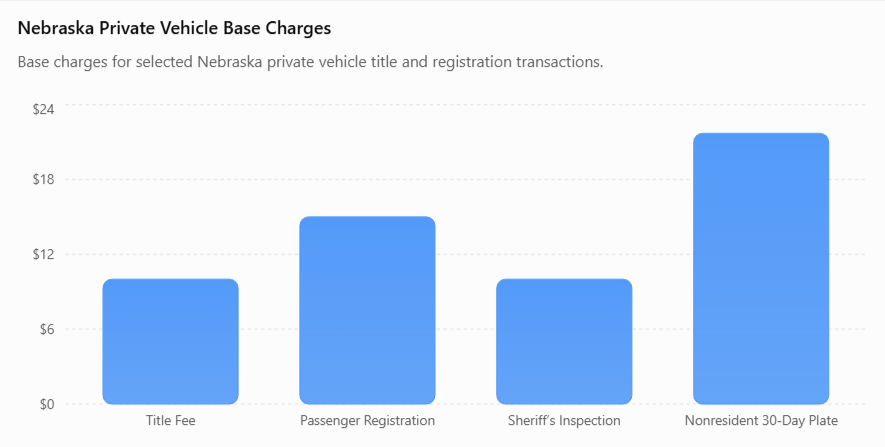
Title fee | $10 |
Passenger registration fee | $15 plus other charges |
Universal bill-of-sale notarization | No |
Out-of-state vehicle inspection | Required |
Sheriff’s inspection fee | $10 |
Inspection validity | 90 days |
The requirements are published by the Nebraska Department of Motor Vehicles and the Nebraska Department of Revenue. (Nebraska Department of Motor Vehicles)
Which Nebraska Bill of Sale Form Should You Use?
Nebraska DMV publishes a courtesy Bill of Sale.
The form records:
Sale date.
Purchase price.
Buyer’s and seller’s names.
Buyer’s and seller’s addresses and phone numbers.
Vehicle year, make, model, and VIN.
Buyer’s and seller’s signatures.
Seller’s warranty that the vehicle is free of undisclosed liens.
Nebraska states that individuals must complete a bill of sale at the time of transfer, but they are not required to use that exact courtesy form. (Nebraska Department of Motor Vehicles)
Can the Seller Use Form 6 Instead?
Yes. The seller may provide the buyer with the Nebraska Sales/Use Tax and Tire Fee Statement, Form 6, instead of a separate bill of sale.
An individual seller who does not hold a sales-tax permit should:
Complete Form 6 for the sale.
Retain one signed copy.
Give two signed copies to the buyer.
The buyer presents two copies when paying tax and should retain a copy for at least six years. (Nebraska Department of Revenue)
Does a Nebraska Bill of Sale Need to Be Notarized?
Nebraska does not impose one universal notarization rule on every acceptable private-sale document.
The DMV courtesy Bill of Sale contains acknowledgement sections for a notary public or designated county official. However, Form 6 contains buyer and seller certifications without a notary block, and Nebraska permits Form 6 to serve as the transaction document.
The parties should therefore follow the requirements of the document they select and any additional instructions from the county treasurer. Using Form 6 can avoid uncertainty when no notarized courtesy form is available. (Nebraska Department of Motor Vehicles)
What Documents Does the Buyer Need?
Document | Purpose |
Properly assigned certificate of title | Transfers ownership |
Bill of sale or two copies of Form 6 | Records transaction and tax information |
Application for Certificate of Title | Requests the Nebraska title |
Odometer disclosure | Records covered-vehicle mileage |
Lien release | Removes a satisfied lien |
Nebraska title | Required before registration |
Proof of insurance | Required for registration |
Inspection certificate | Required for specified vehicles |
Tax and fee payment | Completes title and registration |
Every titled owner must complete the applicable seller section. Nebraska states that spouses cannot simply sign the title as an agent for one another. (Nebraska Department of Motor Vehicles)
What Is an Open Title?
An open title exists when the seller signs the ownership document but leaves the buyer information blank.
“An ‘Open Title’ is a violation of the law.”
— Nebraska Department of Motor Vehicles
Nebraska DMV, a county official, or law enforcement may confiscate an open title. A buyer should never accept a title with an unexplained break between the titled owner and the current seller. (Nebraska Department of Motor Vehicles)
What Sales Tax Applies?
Nebraska’s state sales and use tax rate is 5.5%. Applicable city and county sales or use tax is added according to the current local-rate schedule. (Nebraska Department of Revenue)
The buyer must present two copies of Form 6 and pay the tax within 30 days after purchase. The purchase date is the earlier of:
The date shown on the title; or
The date the buyer takes possession, as shown on Form 6.
Penalty and interest apply when the tax is not paid within the 30-day period. (Nebraska Department of Revenue)
What Nebraska Title and Registration Fees Apply?
Charge | Amount |
Certificate of title | $10 |
Passenger vehicle registration | $15 |
Emergency Medical System fee | $0.50 |
DMV Cash Fund fee | $2 |
State Recreation Road fee | $1.50 |
County General Fund fee | $1.50 |
New, duplicate, or replacement plate | $4.10 per plate |
Sheriff’s vehicle inspection | $10 when required |
The $15 passenger registration charge is only one part of the total. Nebraska also assesses:
Motor vehicle tax based on original MSRP and age.
Motor vehicle fee based on value, weight, use, and age.
Applicable local tax.
Plate and county charges.
Motor vehicle tax generally continues until the vehicle reaches its 14th registration year. (Nebraska Department of Motor Vehicles)
What Is Nebraska’s 30-Day Deadline?
The buyer must obtain a Nebraska certificate of title within 30 days of purchase. The title application and $10 fee are submitted to the county treasurer. (Nebraska Department of Motor Vehicles)
The buyer must also pay sales or use tax and generally complete registration within 30 days. Penalty and interest apply when the tax is paid late. (Nebraska Department of Revenue)
Which Nebraska Vehicles Need an Inspection?
A vehicle inspection is required for:
Vehicles brought into Nebraska with an out-of-state ownership document.
Assembled vehicles.
Vehicles changing from salvage to previously salvaged status.
Vehicles requiring an assigned VIN.
Cases in which DMV or the county treasurer requests an inspection.
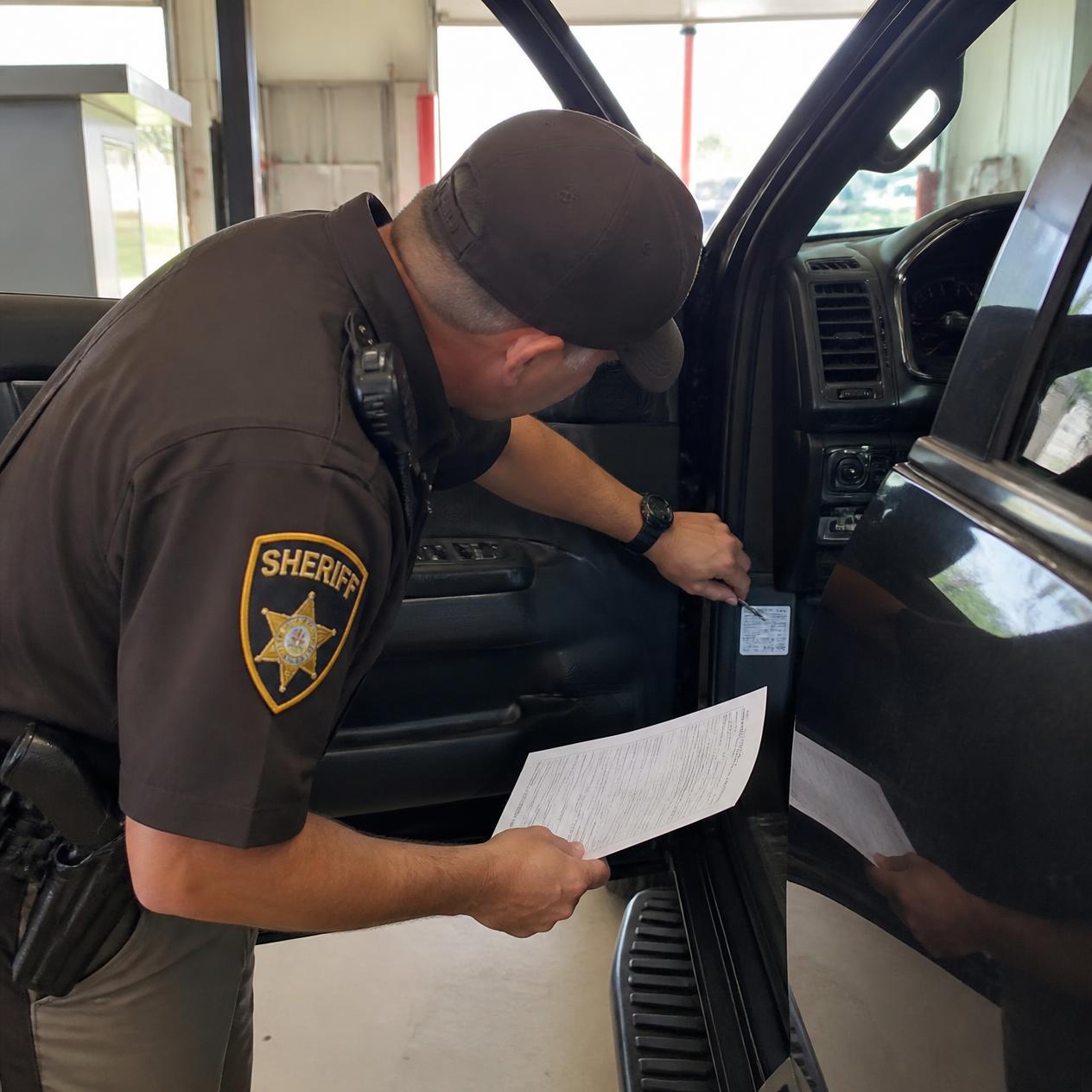
The county sheriff generally conducts the inspection. The fee is $10, and the completed inspection expires after 90 days. (Nebraska Department of Motor Vehicles)
A routine in-state transfer involving a normal Nebraska title does not generally require the out-of-state identification inspection.
What Happens to Nebraska License Plates?
The seller should retain the plates, registration, and validation decals rather than leave them with the buyer.
A seller may qualify for a refund or credit for the unused registration, motor vehicle tax, and motor vehicle fee. To claim an eligible refund following a transfer of ownership, the owner generally submits the plates, registration, decals, and refund application to the county treasurer within 60 days of the vehicle’s change of status. (Nebraska Department of Motor Vehicles)
Can an Out-of-State Buyer Get a Temporary Plate?
A nonresident who purchases a vehicle in Nebraska may obtain a 30-day plate for the purpose of moving it to the buyer’s home state.
The buyer must present a properly assigned title or Manufacturer’s Statement of Origin showing the out-of-state address. The permit costs $21.70 and cannot be used to pull or transport a load. (Nebraska Department of Motor Vehicles)
How to Complete a Nebraska Private Vehicle Sale
Confirm that every seller is named on the title.
Compare the title VIN with the vehicle.
Obtain a release for every recorded lien.
Complete the title’s seller, buyer, and odometer sections.
Complete a bill of sale or Form 6.
Have the buyer obtain any required sheriff’s inspection.
Retain the seller’s plates and registration.
Apply for title and pay tax within 30 days.
Register the vehicle and provide proof of insurance.
Confirm that every seller is named on the title.
Compare the title VIN with the vehicle.
Obtain a release for every recorded lien.
Complete the title’s seller, buyer, and odometer sections.
Complete a bill of sale or Form 6.
Have the buyer obtain any required sheriff’s inspection.
Retain the seller’s plates and registration.
Apply for title and pay tax within 30 days.
Register the vehicle and provide proof of insurance.
Special Nebraska Ownership Situations
Mutilated Title
A signature in the wrong place or an alteration can make the title unusable. The seller may have to obtain a duplicate title before the transfer can continue.
Deceased Owner
An estate representative may need court appointment documents. Nebraska also provides an affidavit process for certain smaller estates when the statutory requirements are met. (Nebraska Department of Motor Vehicles)
No Proper Ownership Document
A buyer who did not receive acceptable ownership evidence may need to investigate Nebraska’s bonded-title procedure. A bill of sale alone does not guarantee eligibility for a title. (Nebraska Department of Motor Vehicles)
Common Nebraska Bill of Sale Mistakes
Failing to complete either a bill of sale or Form 6.
Assuming the courtesy bill-of-sale form is the only accepted document.
Accepting an open title.
Letting one spouse sign the title for another without proper authority.
Missing the 30-day title and tax deadline.
Forgetting the inspection for an out-of-state vehicle.
Leaving the seller’s plates on the vehicle.
Allowing a completed inspection to expire after 90 days.