
Seller Guide Oct 19, 2026
South Carolina provides Form 4031 as its official vehicle Bill of Sale. The form records the price, trade-in, mileage, buyer, seller and lien information, but the assigned certificate of title remains the document that transfers ownership.
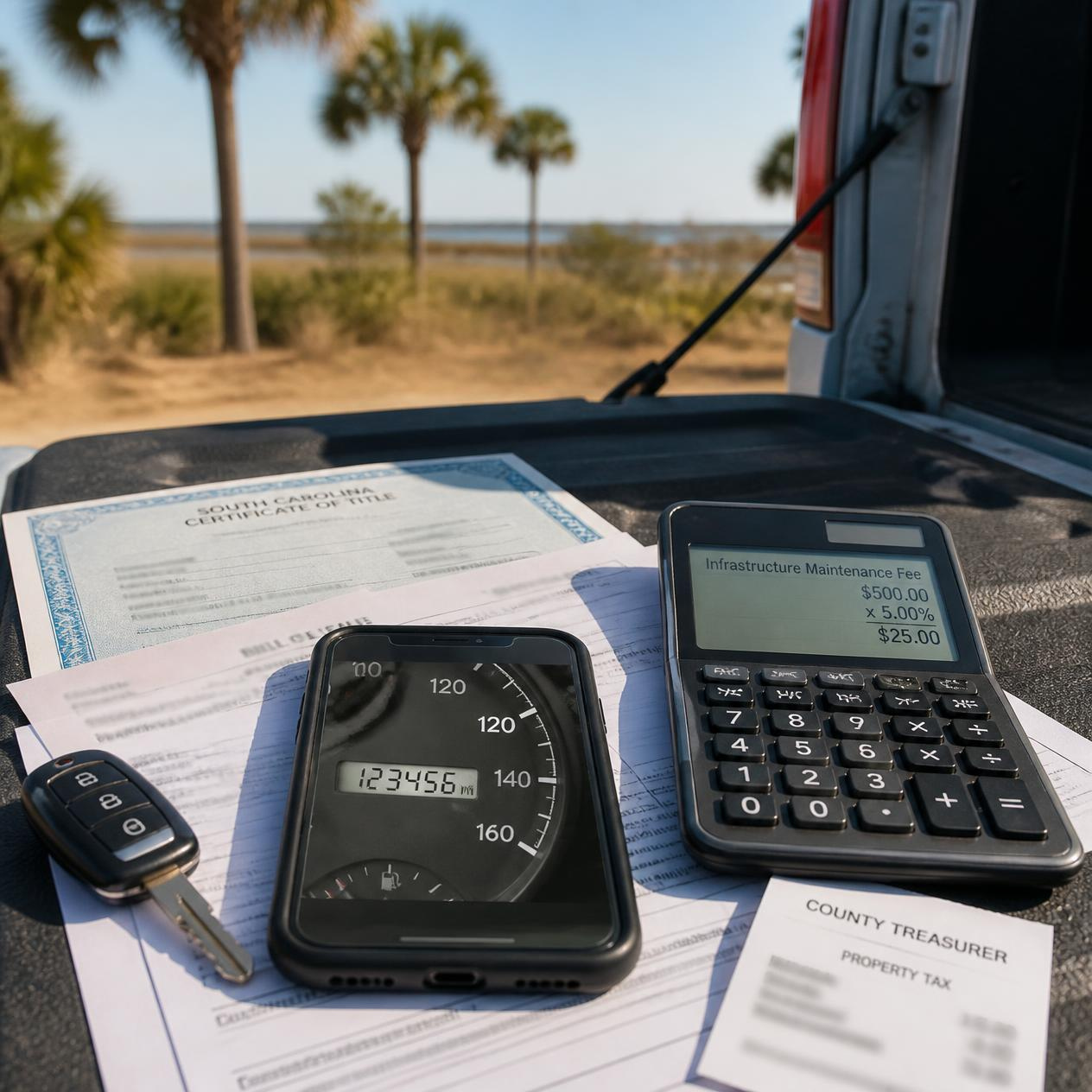
A South Carolina buyer has 45 days from the purchase date to title and register the vehicle. A private purchase also triggers the state Infrastructure Maintenance Fee, generally 5% of fair market value with a $500 maximum.
Download the free KarKiosk vehicle bill of sale PDF before completing the handover. It gives the buyer and seller a separate signed record of the VIN, price, mileage and sale date to preserve alongside Form 4031 and the assigned title.
Form 4031 Is More Detailed Than a Basic Sale Receipt
South Carolina DMV publishes Form 4031, Bill of Sale.
The form must be typed or printed in black ink.
It records:
Seller’s name and address.
Buyer’s name and address.
Sale date.
Full VIN.
Vehicle make.
Model.
Body type.
Model year.
Sale price.
Trade-in amount.
Taxable total.
Existing liens and encumbrances.
Odometer reading.
Mileage status.
Buyer’s and seller’s signatures.
The original must be submitted to SCDMV when the form is required in the transaction. Alterations or erasures void the document.
See the official form at South Carolina DMV — Form 4031 Bill of Sale.
The Bill of Sale Does Not Replace the Assigned Title
The seller should properly assign the current certificate of title to the buyer.
The ownership paperwork should agree on:
Buyer’s legal name.
Seller’s legal name.
VIN.
Sale date.
Mileage.
Sale price.
Lien information.
A separate bill of sale cannot cure an open title or unexplained break in ownership.
Do not accept a title previously signed to another buyer who never transferred it.
South Carolina Private-Sale Rules
Item | South Carolina Rule |
Official bill of sale | Form 4031 |
Main title application | Form 400 |
Buyer title/registration period | 45 days |
Title fee | $15 |
Standard passenger registration | $40 |
Plate transfer | $10 |
Private-sale IMF | 5% of fair market value, maximum $500 |
Property tax before registration | Required |
45-day temporary plate | Available with qualifying ownership documents |
Odometer disclosure | 20-year rule for covered newer vehicles |
Routine statewide safety inspection | Not part of standard registration process |
Routine statewide emissions inspection | Not required |
The Buyer Has 45 Days
Form 400 instructions state that a customer has 45 days from the purchase date to register the vehicle with SCDMV.
Penalties are assessed after the 45-day period.
The purchase date entered on Form 400 must match the supporting ownership and bill-of-sale documents.
The buyer should not use a later date on a new bill of sale to extend the deadline.
Form 400 instructions and current title requirements are available from South Carolina DMV — Form 400 Instructions.
This 45-day system differs from states such as North Carolina, where the buyer faces a shorter title-application period and a notarized title process.
South Carolina Uses an Infrastructure Maintenance Fee
South Carolina does not apply ordinary retail sales tax to the same private vehicle transaction in the way many states do.
Instead, a person first titling or registering a privately purchased vehicle generally pays the Infrastructure Maintenance Fee, or IMF.
For a vehicle purchased from someone other than a dealer, the fee equals:
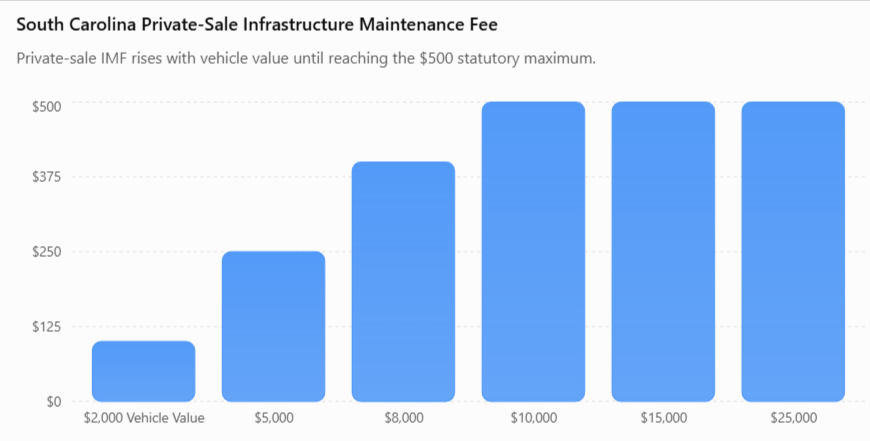
5% of the vehicle’s fair market value, capped at $500.
The fee must be collected before SCDMV issues the first South Carolina title or registration.
Examples:
$5,000 fair market value → $250 IMF.
$8,000 fair market value → $400 IMF.
$10,000 fair market value → $500 IMF.
$20,000 fair market value → still $500 IMF.
The cap means the charge stops increasing once the calculated 5% reaches $500.
Official statutory proof is available through South Carolina Legislature — Infrastructure Maintenance Fee Law.
The Sale Price and IMF Value Are Not Always the Same
Form 4031 records the actual vehicle sale price.
The IMF for a private sale is based on fair market value.
This matters when a vehicle is sold for much less than its normal market value.
A $3,000 bill-of-sale price does not automatically guarantee a $150 IMF when SCDMV determines that the vehicle’s fair market value is materially higher.
The parties should record the real sale price and keep evidence of severe mechanical or body damage when it explains a below-market transaction.
Some Transfers Are Exempt From the IMF
South Carolina law provides exemptions for several qualifying transfers.
Examples include transfers:
To immediate family members.
To legal heirs, legatees or distributees.
In qualifying business-formation transactions.
To certain dealers or financial institutions for resale.
Through other specifically defined statutory situations.
The buyer must document the exemption on the title application when claiming it.
Do not label a sale as a gift merely to avoid the IMF.
South Carolina Title and Registration Fees
The standard certificate-of-title fee is $15.
Current passenger-vehicle registration is $40.
SCDMV also lists:
Plate transfer: $10.
Registration for a person age 64: $38.
Registration for a person age 65 or older or a qualifying person with a disability: $36.
Alternative-fuel road-use fee: $120.
Hybrid road-use fee: $60.
Specialty plates and other vehicle classes carry separate charges.
The $15 title fee and $40 registration do not include county property taxes or the Infrastructure Maintenance Fee.
County Property Tax Comes Before Registration
South Carolina registration is tied directly to county property tax.
Before the vehicle can be registered, the buyer must generally pay the applicable county vehicle property tax and obtain the paid property-tax receipt.
SCDMV states that registration cannot be issued until the title process and applicable county property-tax requirement are completed.
This creates a practical sequence:
Complete the sale.
Prepare title paperwork.
Address county property tax.
Submit the title and registration application.
Pay SCDMV fees and IMF.
Receive or transfer the plate.
Do not calculate the transaction cost from the title fee and IMF alone.
A 45-Day Temporary Plate Is Available
South Carolina issues a traceable 45-day temporary plate for qualifying purchases.
The buyer must bring:
Title, bill of sale or lease contract from the seller.
Completed Form 45-A.
Other documentation required by SCDMV.
The temporary plate allows limited operation while the permanent title and registration are being completed.
It does not extend the 45-day title and registration deadline.
The Seller Should Remove the Existing Plate
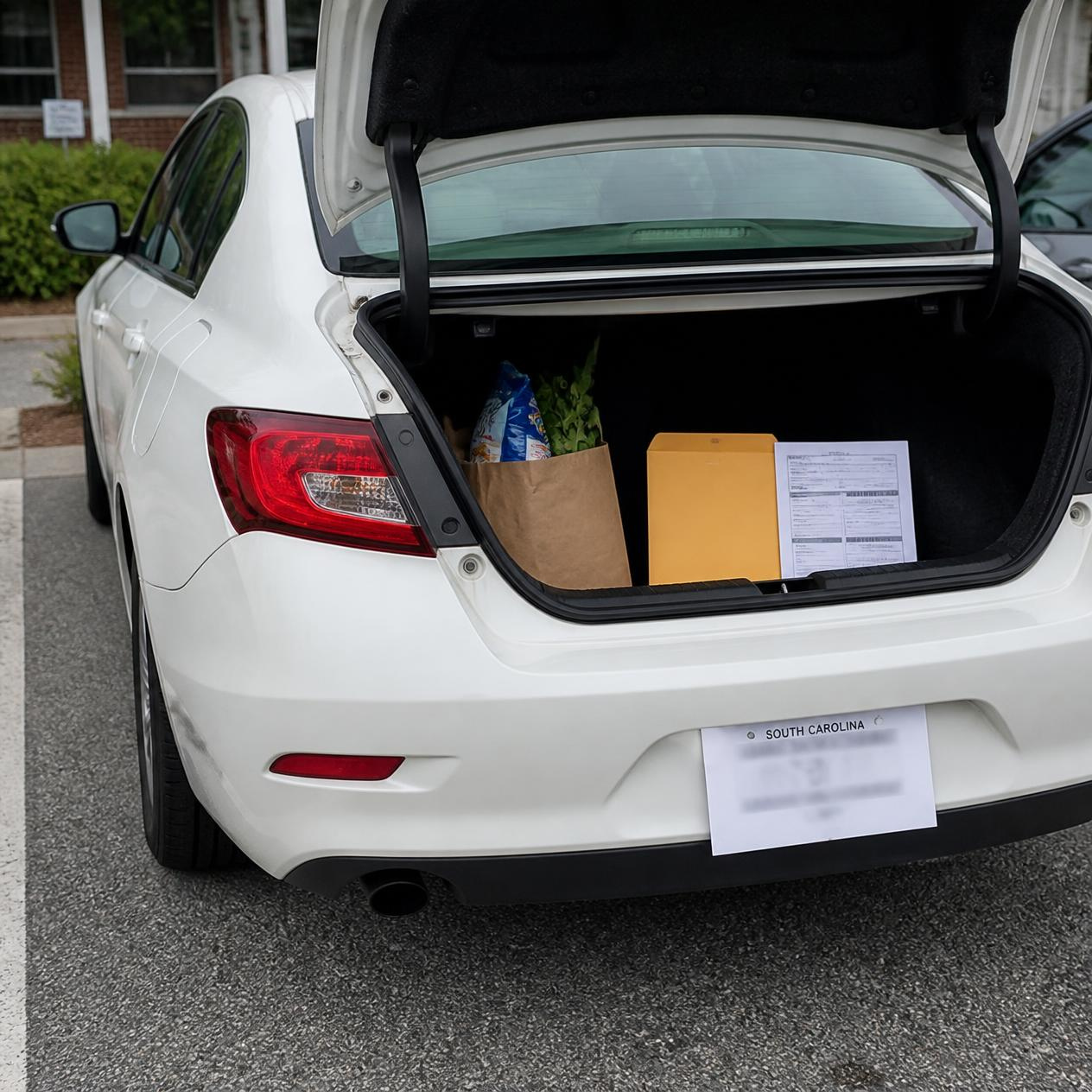
The seller should remove the South Carolina plate unless an approved transfer procedure applies.
A valid plate can be transferred to another vehicle owned by the same registrant for a $10 transfer fee.
A plate that will not be transferred should be returned or decommissioned according to SCDMV procedure.
The seller should coordinate the plate and insurance cancellation carefully rather than leaving the registration active on a vehicle that has already been sold.
The buyer should use a transferred buyer-owned plate, new registration plate or traceable temporary plate.
South Carolina Uses the 20-Year Odometer Rule
Form 400 instructions apply the current extended odometer-reporting requirement.
Vehicles model-year 2010 or earlier are exempt under the form’s current instructions.
Vehicles model-year 2011 and newer continue to report mileage for 20 years.
The title and Form 4031 should agree on the mileage.
Form 4031 requires the seller to identify whether the stated mileage:
Is actual.
Exceeds mechanical limits.
Is not actual mileage.
False odometer information can lead to state and federal penalties.
South Carolina Does Not Require a Routine Statewide Inspection
South Carolina’s normal title and registration process does not impose a statewide passenger-vehicle safety inspection or emissions test comparable to programs in Rhode Island, Pennsylvania or New York.
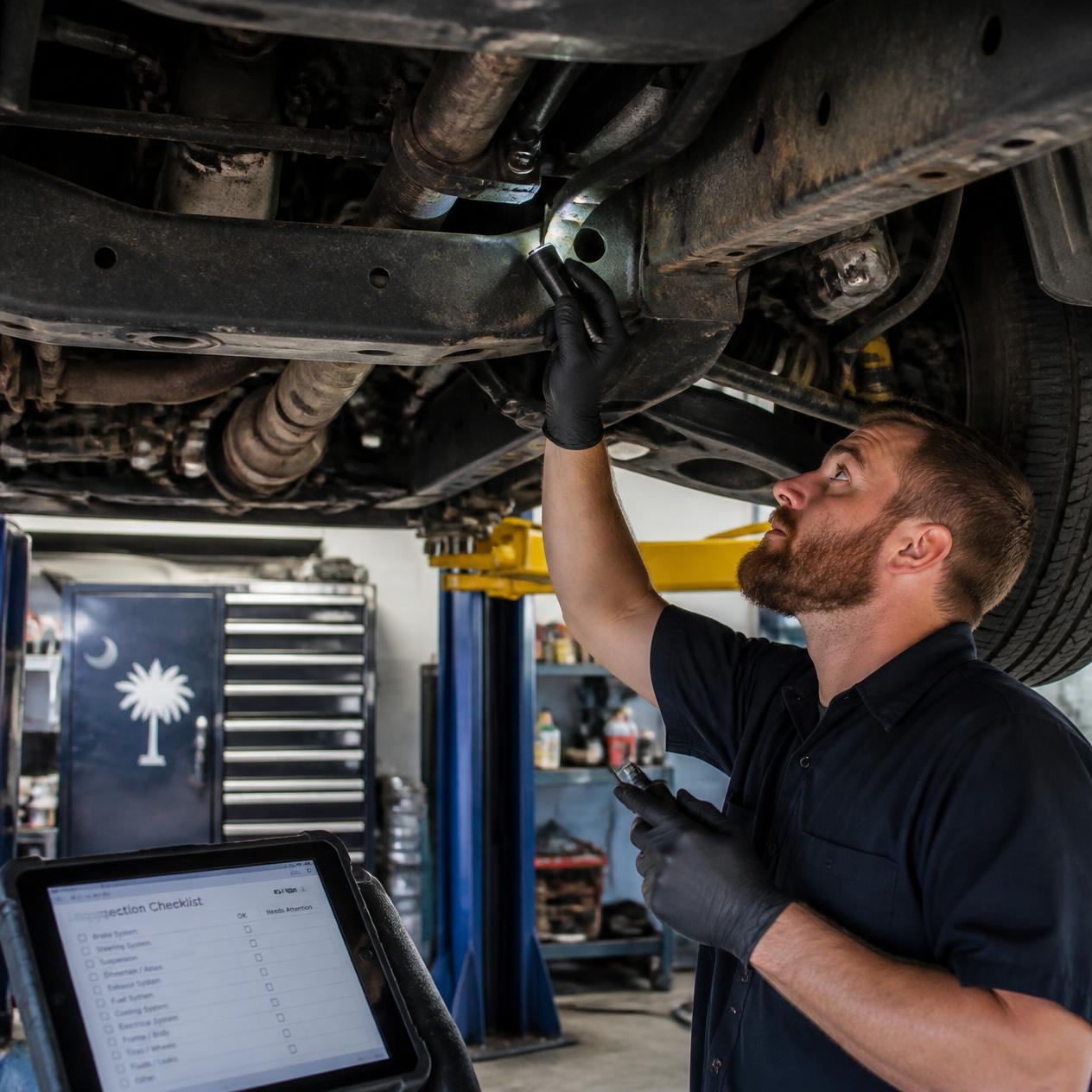
The buyer still has responsibility for verifying that the vehicle is roadworthy.
Special ownership situations can involve an inspection.
For example, a vehicle without a previous title can require physical vehicle-identification verification by SCDMV or law enforcement as part of the affidavit-of-ownership process.
This is an ownership verification, not a routine annual safety inspection.
What If the Vehicle Has No Title?
A normal bill of sale cannot replace a missing South Carolina title.
SCDMV has a separate Affidavit of Ownership procedure for limited cases where no prior title can be obtained.
That process can require:
Form TI-021A.
Detailed ownership statement.
Photographs from all four sides.
Vehicle identification verification.
Supporting ownership history.
$15 title fee.
Applicable IMF or tax.
Approval is not automatic.
The buyer should confirm eligibility before paying for a vehicle without normal ownership documents.
This risk is also addressed in KarKiosk’s Ohio Bill of Sale guide, although Ohio uses a different duplicate-title and notarized-title system.
How to Complete a South Carolina Private Sale
Match the seller’s identity with the title.
Compare the VIN on the title with the vehicle.
Confirm that all liens have been released.
Complete the title assignment.
Complete Form 4031 with the actual price and mileage.
Prepare Form 400.
Pay the applicable county property tax.
Obtain a 45-day temporary plate when required.
Submit the title and registration transaction within 45 days.
Pay the $15 title fee, registration fee and applicable IMF.
Match the seller’s identity with the title.
Compare the VIN on the title with the vehicle.
Confirm that all liens have been released.
Complete the title assignment.
Complete Form 4031 with the actual price and mileage.
Prepare Form 400.
Pay the applicable county property tax.
Obtain a 45-day temporary plate when required.
Submit the title and registration transaction within 45 days.
Pay the $15 title fee, registration fee and applicable IMF.
Common South Carolina Private-Sale Mistakes
Treating Form 4031 as a replacement for the title.
Altering or erasing Form 4031.
Reporting false mileage.
Assuming the IMF is always based on the handwritten sale price.
Forgetting the $500 IMF cap.
Ignoring county vehicle property tax.
Missing the 45-day registration period.
Treating a temporary plate as an extension of the title deadline.
Leaving the seller’s plate on the vehicle.
Buying a no-title vehicle without confirming the affidavit process first.