
Seller Guide Oct 19, 2026
Ohio does not generally require a separate bill of sale for an in-state private vehicle sale when a valid paper title is completed correctly. The seller must complete the title assignment and have the seller’s signature notarized, while the buyer must transfer the title within 30 days to avoid a $5 late fee.
When the current Ohio title exists only electronically, the buyer and seller use Form BMV 3770 instead of the assignment section on a paper title. Both parties must complete and notarize their respective sections.
Download our free vehicle bill of sale PDF to record the VIN, mileage, sale price and buyer-seller details before the notarized title handoff. Keep a signed copy with the title paperwork as a clear record of the private sale.
Ohio Separates the Title Transfer From Registration
Ohio uses two government offices for different parts of the transaction.
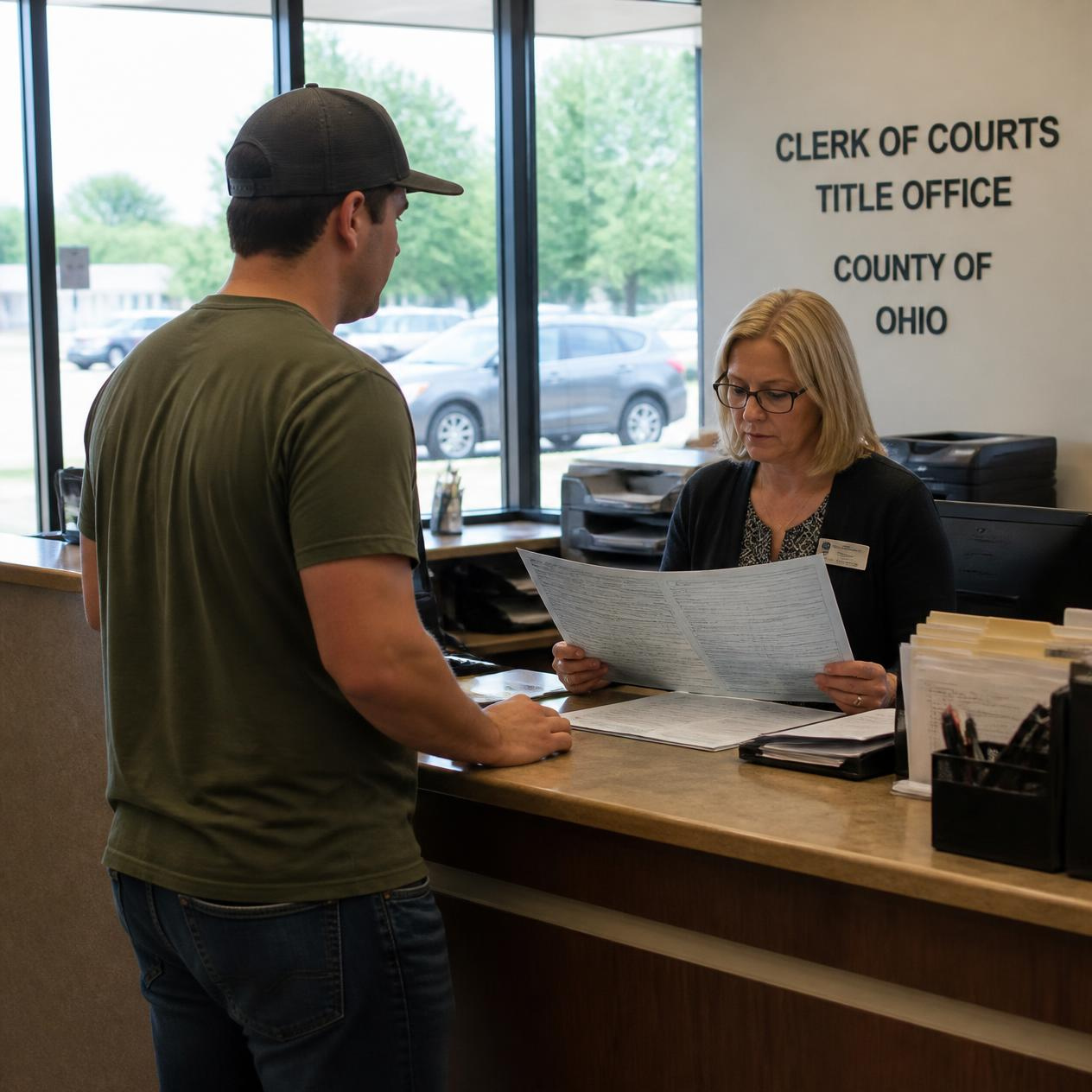
“Ohio titles are issued by Clerk of Courts title offices, the BMV does not issue titles.”
— Ohio Bureau of Motor Vehicles
| Office | Main Responsibilities |
|---|---|
| County Clerk of Courts title office | Transfers the title, collects vehicle tax, records liens and issues the Ohio title |
| BMV deputy registrar | Issues registration, permanent plates, plate transfers and temporary tags |
| Ohio EPA E-Check station | Completes required emissions testing in seven covered counties |
The buyer normally completes the title transfer first and then obtains registration and plates. An out-of-state title must be converted to an Ohio title before the vehicle can be registered in Ohio.
Ohio Private Vehicle Sale Quick Facts
Question | Ohio Rule |
Is a separate bill of sale required? | Not normally for a complete in-state paper-title transfer |
Main ownership document | Properly assigned original title |
Paper-title notarization | Seller’s title-assignment signature must be notarized |
Electronic-title form | BMV 3770 |
BMV 3770 notarization | Seller and buyer notarize their respective sections |
Buyer’s title deadline | 30 days |
Late title fee | $5 |
State sales tax | 5.75%, plus applicable county and transit tax |
Base title fee | $18; $23 in some counties |
License plates | Seller removes them immediately |
Temporary tag | 45 days; $23 |
Out-of-state VIN inspection | Required; $8 base fee |
Emissions test | Required for qualifying vehicles in seven counties |
These rules and current charges are published by the Ohio Bureau of Motor Vehicles, the Ohio Department of Taxation, the Ohio Environmental Protection Agency, and the Ohio Revised Code.
Is a Bill of Sale Required in Ohio?
Ohio BMV does not list a separate bill of sale among the standard documents for an ordinary private sale involving a correctly assigned Ohio paper title.
The assigned title remains the primary ownership document. A separate bill of sale cannot replace it, correct an open title or transfer a vehicle from someone who is not the titled owner.
Both parties should still complete a bill of sale because it provides a separate record of:
Buyer’s and seller’s full legal names and addresses.
Vehicle year, make, model and full VIN.
Title number and plate number.
Exact sale date and time.
Actual purchase price.
Odometer reading.
Payment method and payment status.
Known condition issues.
Included keys and accessories.
Buyer’s and seller’s signatures.
The bill of sale can support the reported price if the Ohio Department of Taxation later reviews the transaction. It can also document promises or vehicle-condition terms that do not appear on the title.
Paper and Electronic Ohio Titles Follow Different Processes
Selling a Vehicle With a Paper Title
The seller must complete the assignment of ownership on the reverse of the original title.
The assignment normally records:
Buyer’s legal name and address.
Purchase price.
Sale date.
Odometer reading.
Seller’s signature.
Required co-owner signatures.
Lien information, when applicable.
The seller’s signature or signatures must be notarized. The seller then gives the original assigned title to the buyer. A photocopy is not accepted for a standard title transfer.
Selling a Vehicle With an Electronic Ohio Title
An electronic title has no paper assignment section. The parties instead use BMV 3770, Ownership Assignment and Title Application for Casual Sale.
The seller:
Completes page 1.
Has every seller’s signature notarized.
Gives both pages to the buyer.
The buyer:
Completes page 2.
Has every buyer’s signature notarized.
Submits the form to a county title office.
BMV 3770 can be used only when the current Ohio title is electronic. It cannot be used by dealerships or insurance companies and cannot be used for several special vehicle categories listed by BMV.
The latest title and odometer forms are available through the official Ohio BMV Forms page.
Can an Ohio Private Title Transfer Be Completed Online?
Eligible person-to-person casual sales can use the Ohio Title Portal.
The transaction generally must meet these conditions:
The transfer is between private individuals.
The property is an eligible motor vehicle.
No lien exists on the current title.
No lien will appear on the new title.
The buyer is at least 18.
The buyer is an Ohio resident.
The buyer has a Social Security number.
The buyer has a valid Ohio driver licence or identification card.
The buyer has an OH|ID account.
Required documents have been properly signed and notarized.
A temporary tag must be obtained before the online title transfer is completed. Once the Ohio title has been transferred, the buyer can obtain only regular registration and plates for that vehicle.
Which Ohio Documents Need Notarization?
Notarization depends on the document.
| Document | Standard Ohio Requirement |
|---|---|
| Assignment on an Ohio paper title | Seller’s signature or signatures notarized |
| BMV 3770, page 1 | All seller signatures notarized |
| BMV 3770, page 2 | All buyer signatures notarized |
| BMV 3771 Power of Attorney | Original notarized form required |
| Separate private bill of sale | No general statewide notary requirement |
| Out-of-state title | Follow the issuing state’s assignment rule |
Do not sign the title in advance when the notary must witness or acknowledge the signature.
An out-of-state title may require notarization because of the rules of the state that issued it. Ohio does not remove a notarization requirement printed on or applicable to another state’s title.
What Documents Does the Ohio Buyer Need?
| Document or Payment | Purpose |
|---|---|
| Original assigned paper title or BMV 3770 | Establishes ownership transfer |
| Acceptable identification | Identifies the buyer |
| Lien release | Removes a satisfied security interest |
| BMV 3724, when applicable | Provides a separate odometer disclosure |
| Sales or use tax payment | Pays tax on the private purchase |
| Title fee | Pays for the Ohio title |
| Out-of-state VIN inspection | Required when converting an out-of-state title |
| Registration and plate documents | Completed through BMV after titling |
A buyer should contact the selected county Clerk of Courts title office before the transaction when the vehicle involves a lien, estate, trust, court order, power of attorney, electronic title or out-of-state ownership document.
How Does Ohio Handle Odometer Disclosure?
The seller should enter the current mileage in the title assignment. Form BMV 3724 is used when a separate Odometer Disclosure Statement is required.
Federal law applies a 20-year disclosure period to model-year 2011 and newer vehicles. A model-year 2011 vehicle therefore remains subject to federal odometer disclosure through 2030 and becomes exempt in 2031.
The seller must indicate whether the mileage is:
Actual mileage.
In excess of the odometer’s mechanical limits.
Not the actual mileage.
Do not estimate the mileage or copy it from an advertisement. Read it directly from the vehicle when the transaction is completed.
The Buyer Has 30 Days to Transfer the Title
The buyer must complete the Ohio title transfer within 30 days of the sale date.
A $5 late title fee applies after the deadline. This fee is separate from the $10 late-registration-renewal charge that can apply to an existing registration renewed more than 30 days late.
The 30-day title period does not allow the buyer to drive without valid registration, plates or a temporary tag.
How Is Ohio Vehicle Tax Calculated?
Ohio collects tax on a private vehicle purchase through the county Clerk of Courts title office.
The state sales-tax rate is 5.75%. County and regional transit taxes are added according to the purchaser’s applicable tax jurisdiction. The combined state, county and transit rate cannot exceed 8.75%.
For a motor vehicle title transfer, the applicable rate generally follows the buyer’s county of residence. The amount subject to tax is based on the total consideration involved in the transaction, not merely the cash handed to the seller.
Ohio reviews non-dealer title transfers to verify the reported price and correct tax. When the state questions a low price, the buyer may need documents such as:
A signed bill of sale.
Cancelled check or verified payment record.
Repair estimates.
Vehicle-condition photographs.
Notarized seller statement.
Other proof of the actual consideration.
False price reporting can result in additional tax and legal consequences.
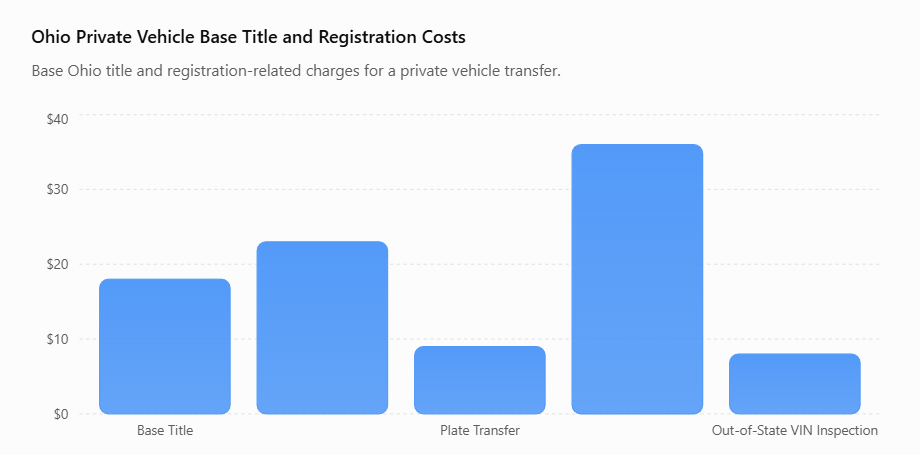
Ohio Title and Registration Costs
| Charge | Current Amount |
|---|---|
| Base certificate of title | $18 |
| Title in counties with an authorized local charge | $23 |
| Late title transfer | $5 |
| Temporary tag | $23 |
| Plate or registration transfer | $9 |
| Annual passenger registration | $36 |
| Out-of-state VIN inspection | $8 |
| One-year deputy registrar service fee | $8 |
| Local permissive registration tax | up to $30 |
Sales tax, mailing charges, lien fees, specialty-plate charges and other transaction-specific costs are additional.
Ohio also charges annual fuel-type supplements of $100 for a hybrid, $150 for a plug-in hybrid and $200 for an electric vehicle.
The Seller Must Remove the Ohio Plates
The vehicle’s registration expires when ownership transfers. The seller must immediately remove the licence plates rather than leave them for the buyer.
The seller may transfer the registration and plates to a succeeding eligible vehicle purchased by the same person. The transfer must be completed within 30 days. Under the statutory conditions, the seller can display those plates on the eligible replacement vehicle during that period.
The buyer must obtain:
Permanent Ohio registration and plates; or
A valid temporary tag obtained before the title transfer.
A 45-day temporary tag costs $23. BMV states that the tag must be obtained before the buyer transfers the title into the buyer’s name.
When Is an Ohio VIN Inspection Required?
An in-state private transfer involving a normal Ohio title does not require an out-of-state VIN inspection.
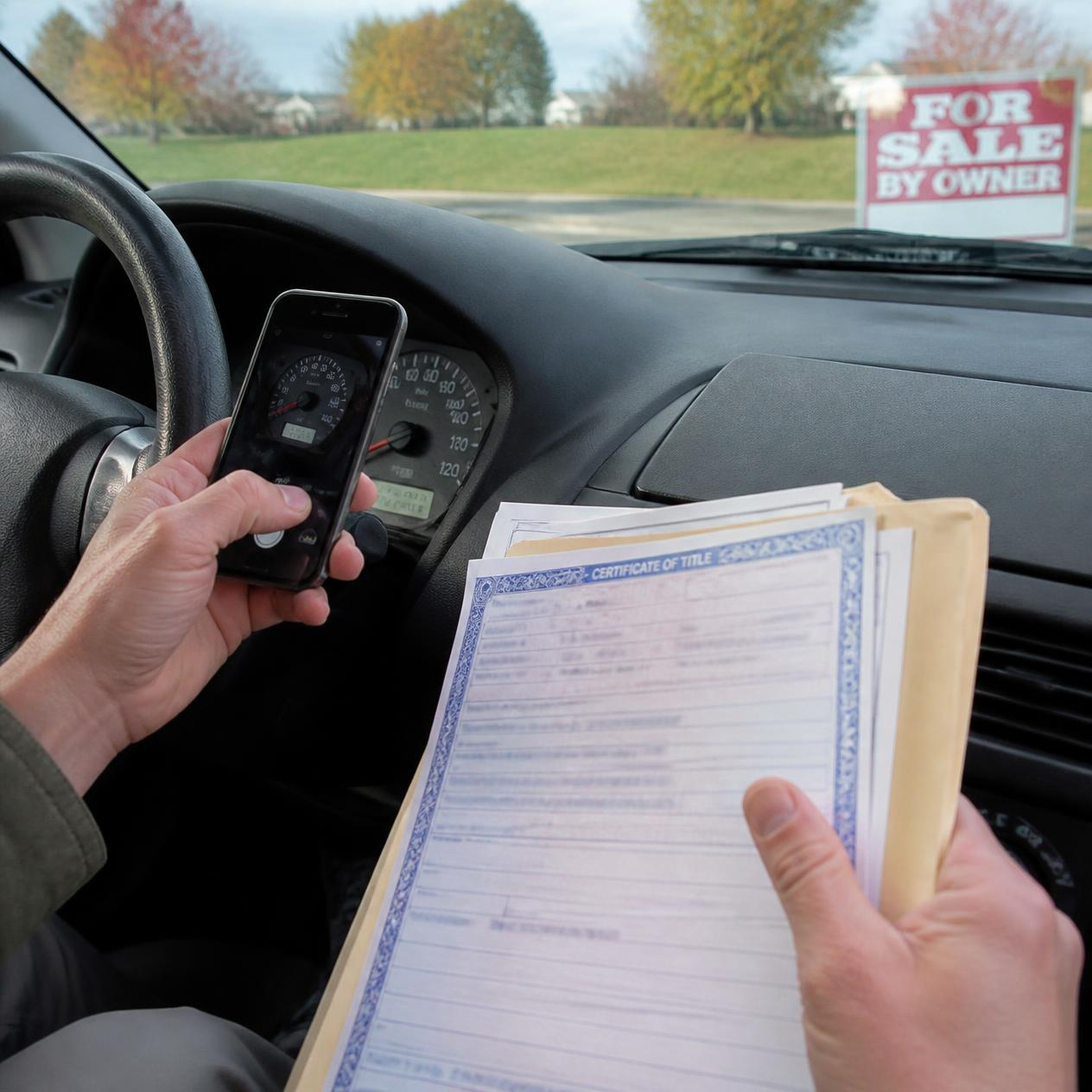
A used vehicle with an out-of-state title must undergo a VIN inspection before the county Clerk of Courts can issue the Ohio title. The inspection can be completed at:
A participating deputy registrar agency.
A participating county title office.
A licensed Ohio motor vehicle dealership.
The BMV base inspection charge is $8. A title office or dealership may have additional handling charges.
Which Counties Require Ohio E-Check?
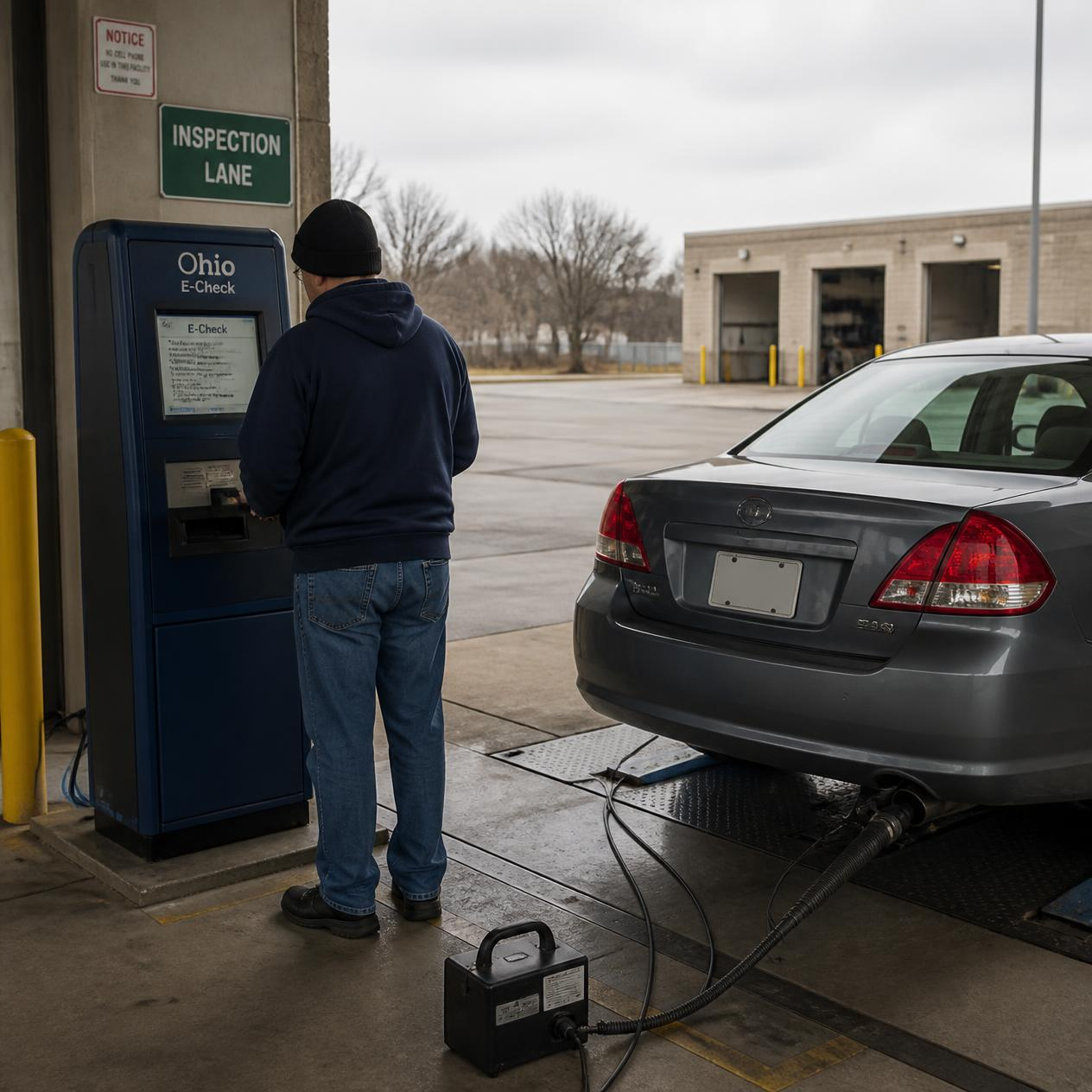
Qualifying vehicles registered in these seven counties are subject to the Ohio E-Check emissions program:
Cuyahoga.
Geauga.
Lake.
Lorain.
Medina.
Portage.
Summit.
During 2026, testing begins for model-year 2020 gasoline and diesel vehicles and model-year 2019 non-plug-in hybrids. Test certificates are valid for 365 days. Ohio EPA operates 23 full-service stations and 21 self-service kiosks available 24 hours a day.
For 2026 registrations, even-model-year covered vehicles generally require testing. An odd-model-year vehicle transferred to a new owner can also require E-Check when it does not have a current passing test.
Ohio’s standard in-state title-transfer checklist does not require a routine statewide passenger-vehicle safety certificate. The principal inspection differences are the out-of-state VIN check and E-Check in the seven covered counties.
What If the Ohio Title Is Lost?
A separate bill of sale does not replace a lost Ohio title.
The titled owner should obtain a duplicate title through a county Clerk of Courts title office before completing the sale. A mailed duplicate-title application uses Form BMV 3774 and requires the owner’s notarized signature.
The buyer should not pay for the vehicle based only on a promise that the title will be supplied later.
How to Complete an Ohio Private Vehicle Sale
Confirm that the seller is the owner named on the title.
Compare the VIN on the title with the vehicle.
Verify that every lien has been released.
Complete a separate bill of sale for transaction records.
Complete the paper title assignment or BMV 3770.
Obtain the required notarization.
Record the odometer reading accurately.
Have the seller remove the Ohio plates.
Obtain a temporary tag before the title transfer when needed.
Transfer the title through a county Clerk of Courts within 30 days.
Complete registration and plates through BMV.
Complete the VIN inspection or E-Check when applicable.
Confirm that the seller is the owner named on the title.
Compare the VIN on the title with the vehicle.
Verify that every lien has been released.
Complete a separate bill of sale for transaction records.
Complete the paper title assignment or BMV 3770.
Obtain the required notarization.
Record the odometer reading accurately.
Have the seller remove the Ohio plates.
Obtain a temporary tag before the title transfer when needed.
Transfer the title through a county Clerk of Courts within 30 days.
Complete registration and plates through BMV.
Complete the VIN inspection or E-Check when applicable.
Common Ohio Bill of Sale and Title Mistakes
Assuming a bill of sale can replace the original title.
Signing the Ohio title without a notary.
Using BMV 3770 for a vehicle with a paper title.
Failing to notarize both parties’ sections of BMV 3770.
Leaving the buyer’s name blank.
Missing the 30-day title deadline.
Obtaining a temporary tag after the title has already been transferred.
Leaving the seller’s plates on the vehicle.
Failing to obtain an out-of-state VIN inspection.
Reporting a false purchase price to reduce tax.