
Bill of Sale Sep 22, 2026
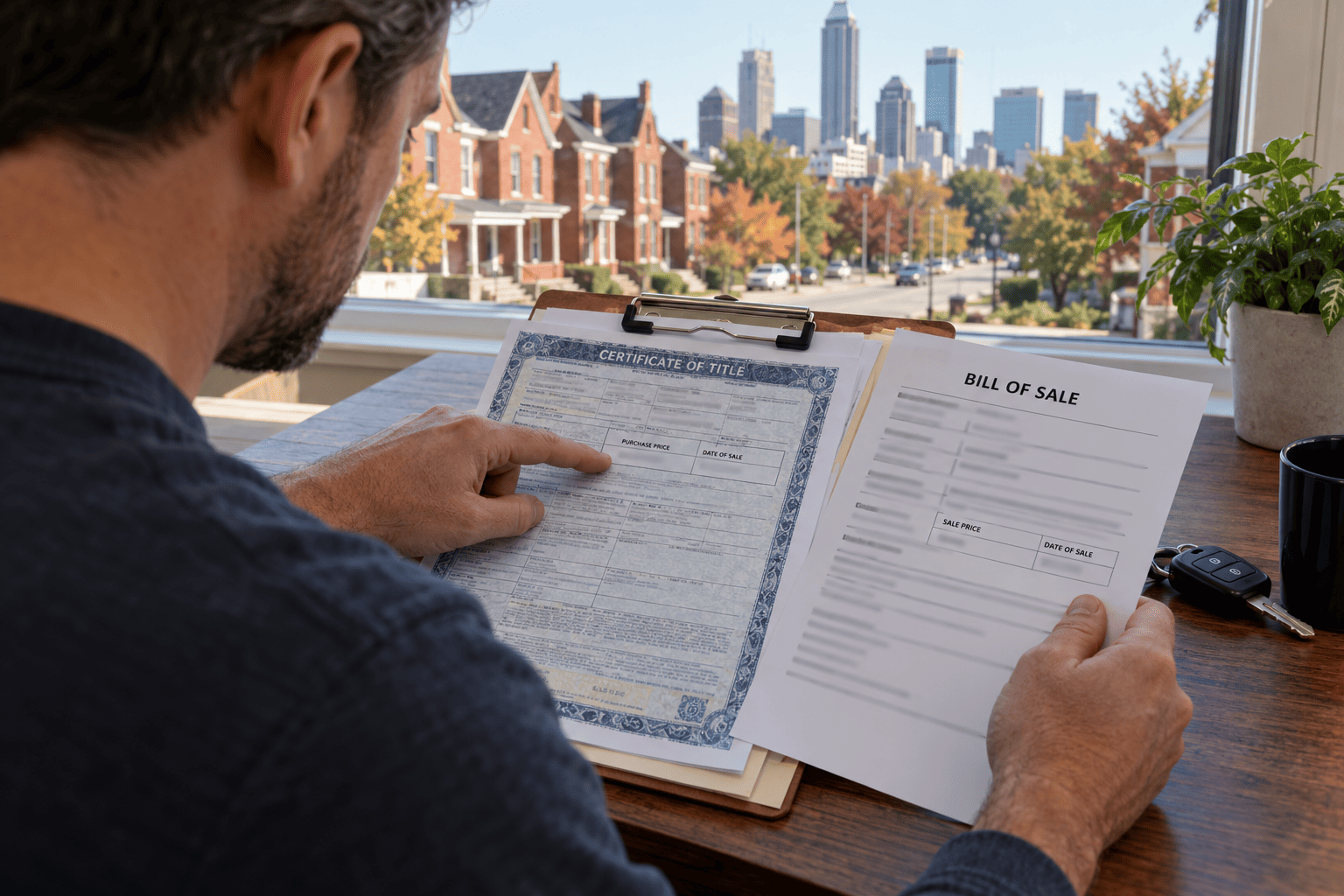
Indiana accepts State Form 44237 as a bill of sale, but an ordinary passenger-car purchase still requires the properly assigned title. Buyers generally have 45 days to apply for title, and newly acquired unregistered vehicles also have a 45-day registration deadline. Use KarKiosk’s free vehicle bill of sale PDF to record the actual price, sale date and parties alongside Indiana’s required ownership paperwork.
Indiana Bill of Sale Quick Facts
Requirement | Indiana Rule |
Official bill of sale | State Form 44237 |
Title application | State Form 205 |
Title-correction affidavit | State Form 55582 |
Bill-of-sale notarization | Not required |
Buyer’s title deadline | 45 days after purchase or acquisition |
Newly acquired vehicle registration | Within 45 days for an Indiana resident |
Late title penalty | $30 |
Standard purchase tax | 7%, unless an exemption or credit applies |
Standard title fee | $15 |
Out-of-state vehicle | Physical VIN inspection required |
Seller’s license plate | Removed and retained by the seller |
These requirements appear in BMV’s bill-of-sale, title and registration guidance, its 2026 Fee Chart, and Indiana DOR’s motor vehicle tax instructions.
When Is an Indiana Bill of Sale Required?
Indiana distinguishes a supporting sale record from a document accepted as primary ownership evidence.
The Indiana BMV bill-of-sale requirements allow a receipt to supply the price or sale date when that information is missing from the title.
Using it instead of a title is limited to specified circumstances, such as a vehicle whose previous owner was not legally required to obtain a title.
A normally titled passenger car does not become exempt because its title is missing. For the ordinary transaction, obtain the assigned title and retain the bill of sale as supporting evidence.
What Information Goes on State Form 44237?
The current State Form 44237, Bill of Sale, includes:
Vehicle identification: VIN, year, make and model.
Sale information: Actual purchase price and sale date.
Seller details: Printed names, addresses and signatures.
Buyer details: Printed names, addresses and signatures.
Seller certification: Confirmation concerning liens that remain the seller’s responsibility.
Complete the vehicle fields; the same form also contains watercraft sections that do not apply to a passenger car.
Does the Bill of Sale Need Notarization?
BMV’s bill-of-sale guidance states:
“The bill of sale is not required to be notarized.”
Use the required signatures on the official form. An out-of-state title or a separate authorization document may have its own acknowledgment requirements.
Can a Bill of Sale Correct the Price Written on the Title?
No. It cannot override information already entered on the title.
BMV directs applicants to State Form 55582, Affidavit for Certificate of Title Correction, when title information was entered incorrectly. Do not submit conflicting documents and expect BMV to select the lower price.
Which Documents Does the Buyer Need?
BMV’s Vehicle Title and/or Registration Application Checklist identifies the applicable documents:
Assigned original title and completed State Form 205.
Proof of identity and required applicant information.
Bill of sale, when needed to support missing transaction details.
Odometer disclosure, including State Form 43230 when required information is not completed on the title.
Physical inspection, including State Form 39530 for an out-of-state vehicle.
Insurance information for registration.
Lien releases, tax documents and payment, as applicable.
Form 44237 does not replace a required odometer disclosure. Keep the mileage certification on the title or the accepted separate disclosure form.
For an Ohio-titled vehicle, check the seller’s documents using the Ohio bill of sale and title guide before arriving at an Indiana branch. Indiana’s receipt rules do not override the issuing state’s title-assignment requirements.
What Is Indiana’s Title and Registration Deadline?
The Indiana BMV buying-and-selling requirements require the buyer to apply for title within 45 days after purchasing or acquiring the vehicle.
BMV’s separate registration guidance gives Indiana residents 45 days to register newly acquired, unregistered vehicles.
Its 2026 Fee Chart lists a $30 late title penalty and a separate $15 late registration penalty, when applicable.
Do not confuse either deadline with temporary driving permission. The application period does not automatically authorize road use without appropriate registration, insurance or a permit.
How Much Tax Applies to an Indiana Private Car Purchase?
Indiana’s standard vehicle sales and use tax rate is 7%. For a private purchase, BMV collects the applicable tax when the buyer applies for the Indiana title.
A $15,000 taxable purchase produces $1,050 in tax, before title, registration and annual excise charges.
Indiana DOR’s Sales Tax Information Bulletin 28S explains that vehicle sales are taxable unless a statutory exemption applies. An informal agreement between buyer and seller does not create an exemption.
Use the actual transaction amount and provide the required documentation for any exemption or credit.

Why Is the Registration Bill Higher Than the Basic Fee?
BMV’s 2026 Fee Chart lists a $15 title fee and a $21.35 passenger-vehicle registration fee. Those two amounts do not represent the complete cost.
Other applicable charges include the $15 Transportation Infrastructure Improvement Fee, annual vehicle excise tax and local vehicle taxes.
For 2026, the published supplemental fees are $242 for electric vehicles and $81 for hybrids, when applicable.
Annual Excise Tax Is Different From the 7% Purchase Tax
BMV’s Excise Tax Information guidance bases passenger-vehicle excise tax on the vehicle’s age and value classification.
The classification uses the manufacturer’s original retail price, not simply the amount paid in the latest private sale.
A lower negotiated purchase price can reduce purchase tax without producing the same reduction in annual excise tax. Certain counties and municipalities also impose vehicle excise or wheel taxes.
Does an Out-of-State Vehicle Need a VIN Inspection?
Yes. BMV requires a physical inspection for a vehicle from another state being titled in Indiana.
The inspection verifies the VIN. It can be completed at a BMV branch or certified service provider without an inspection charge, or by a law enforcement officer who may charge up to $5.
When law enforcement performs it, obtain the completed State Form 39530.
Bring the actual vehicle, not just photographs of its VIN. This identity check is separate from an emissions test or an independent mechanical inspection.

Where Does Indiana Require Emissions Testing?
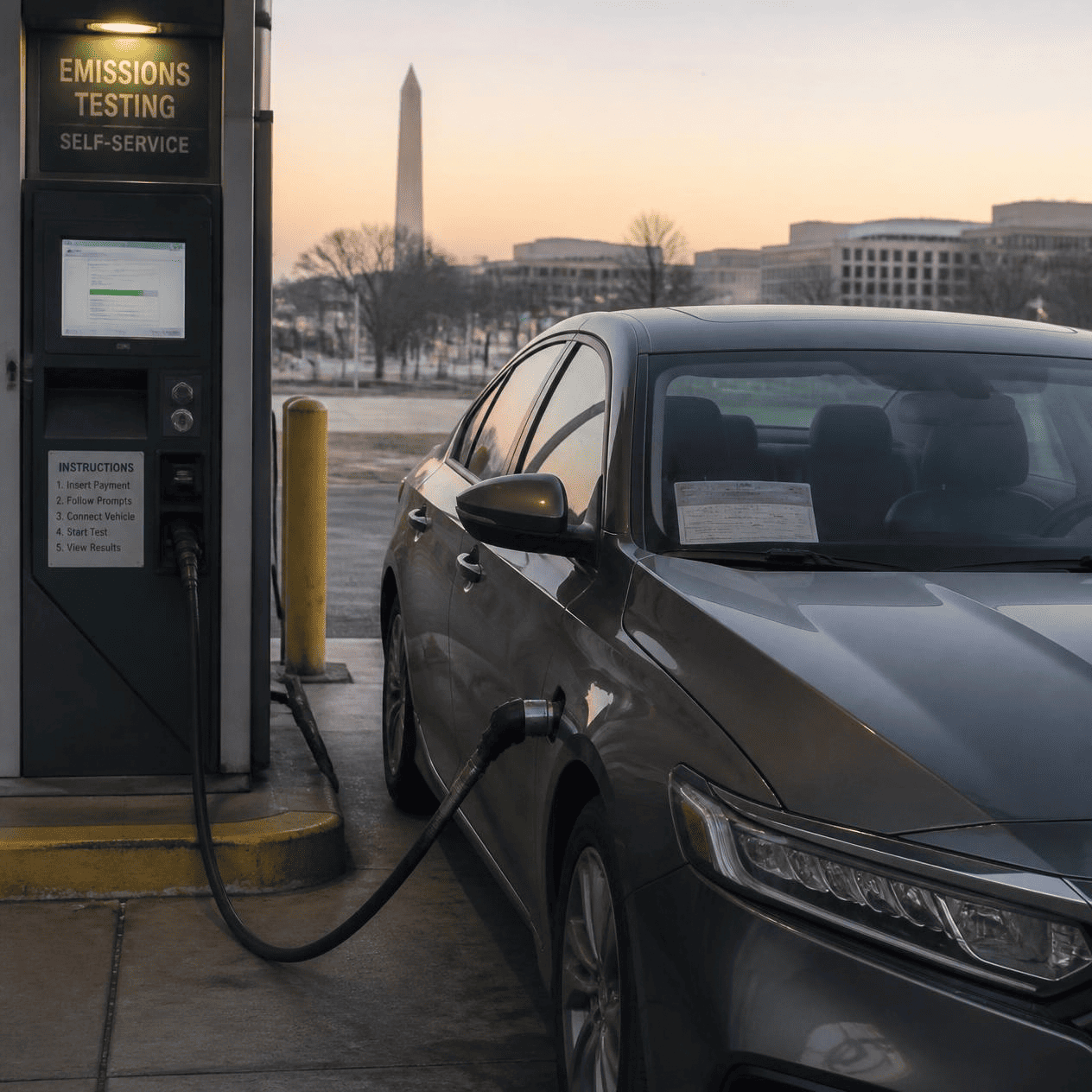
BMV’s Vehicle Emissions Testing Program applies to covered vehicles registered in Lake and Porter counties.
Testing is generally required every two years for qualifying vehicles manufactured after 1975 with a gross vehicle weight rating of 9,000 pounds or less. The newest four model years and other specified vehicles are exempt.
For the normal testing cycle, even-model-year vehicles are tested in even-numbered years and odd-model-year vehicles in odd-numbered years.
The buyer’s registration county matters. A car purchased elsewhere in Indiana may still need testing when registered in Lake or Porter County.

Can the Buyer Drive Home Using the Bill of Sale?
Not by itself. BMV’s temporary-permit guidance provides specific permits rather than an automatic driving period attached to every receipt.
A 96-hour temporary delivery permit can authorize qualifying travel to a storage location, an emissions station or a registration location. Proof of ownership and financial responsibility are required.
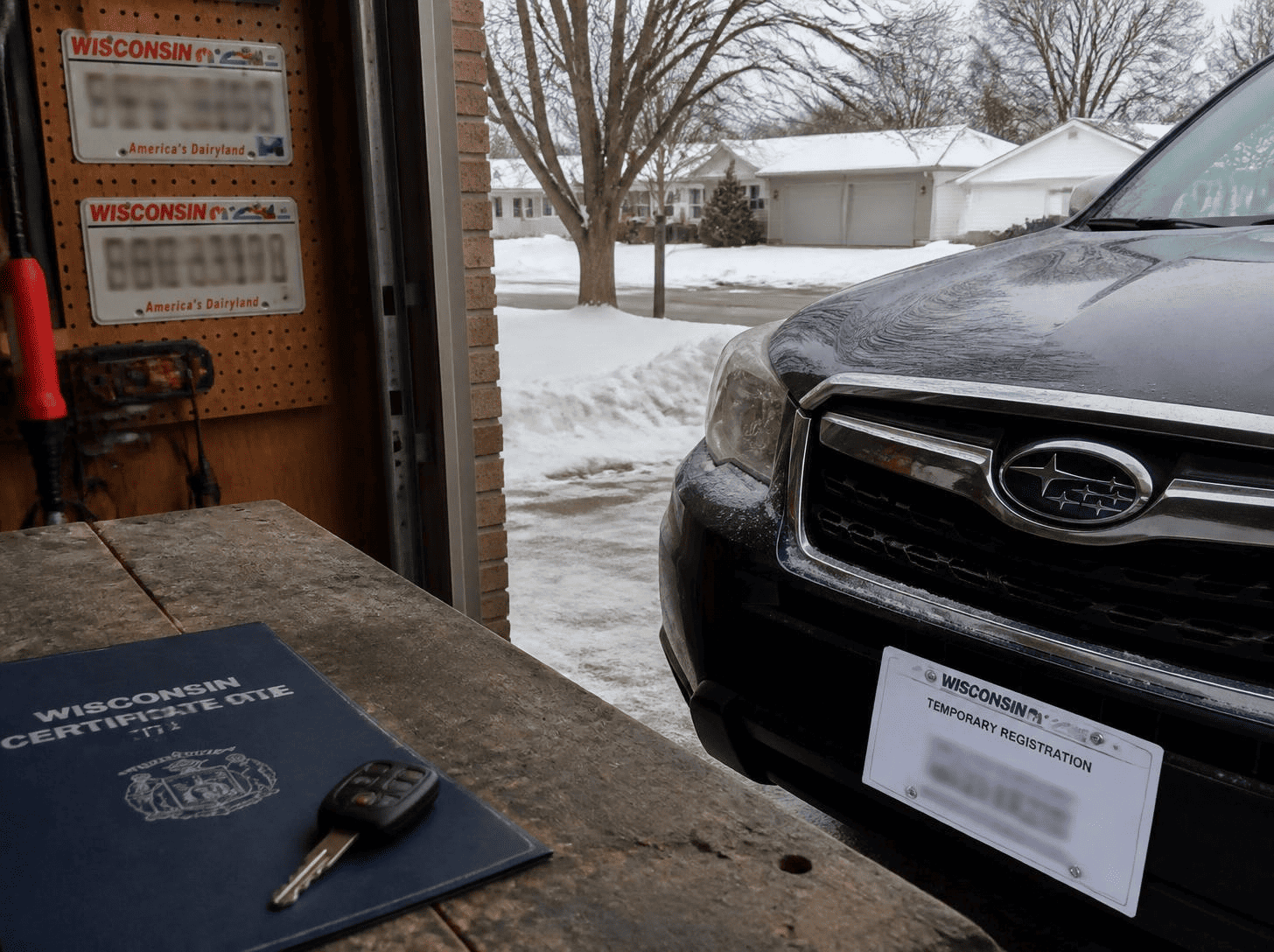
A 30-day temporary registration permit is available for specified situations, including an eligible vehicle bought in Indiana that will be titled and registered elsewhere. It is not a universal extension for every private buyer.
BMV’s current fee chart lists $18 for a temporary permit.
For a buyer taking the vehicle to Kentucky, the Kentucky bill of sale and title guide covers the destination paperwork. Arrange the appropriate permit or transport before handover.
What Does the Seller Do With the Indiana Plate?
BMV’s selling instructions require the seller to remove the plate at the transaction.
The plate does not have to be returned to BMV and may be transferred to another eligible vehicle owned by the same person. The buyer is responsible for their own title, registration and plate arrangements.
Retain the signed sale record and an assigned-title copy. Neither handing over a plate nor leaving it attached completes the buyer’s registration.