
Bill of Sale Sep 22, 2026
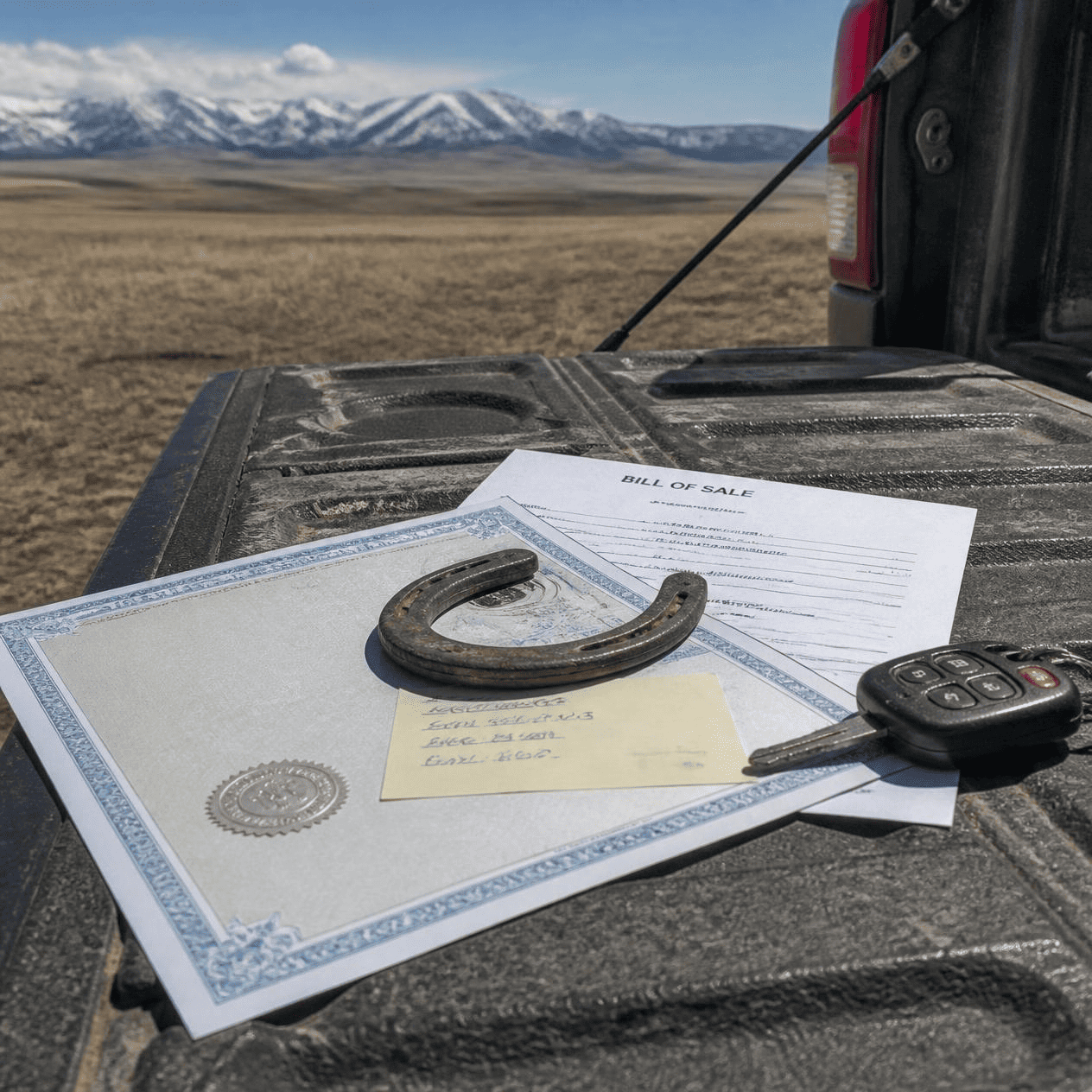
A separate Massachusetts bill of sale is required when the vehicle is exempt from title because of age or when the title does not contain a space for the selling price. For a titled vehicle with a complete price section, the properly assigned title is the main ownership document.
When a separate bill of sale is needed, KarKiosk’s free bill of sale PDF can help document the buyer, seller, vehicle, purchase price, and sale date.
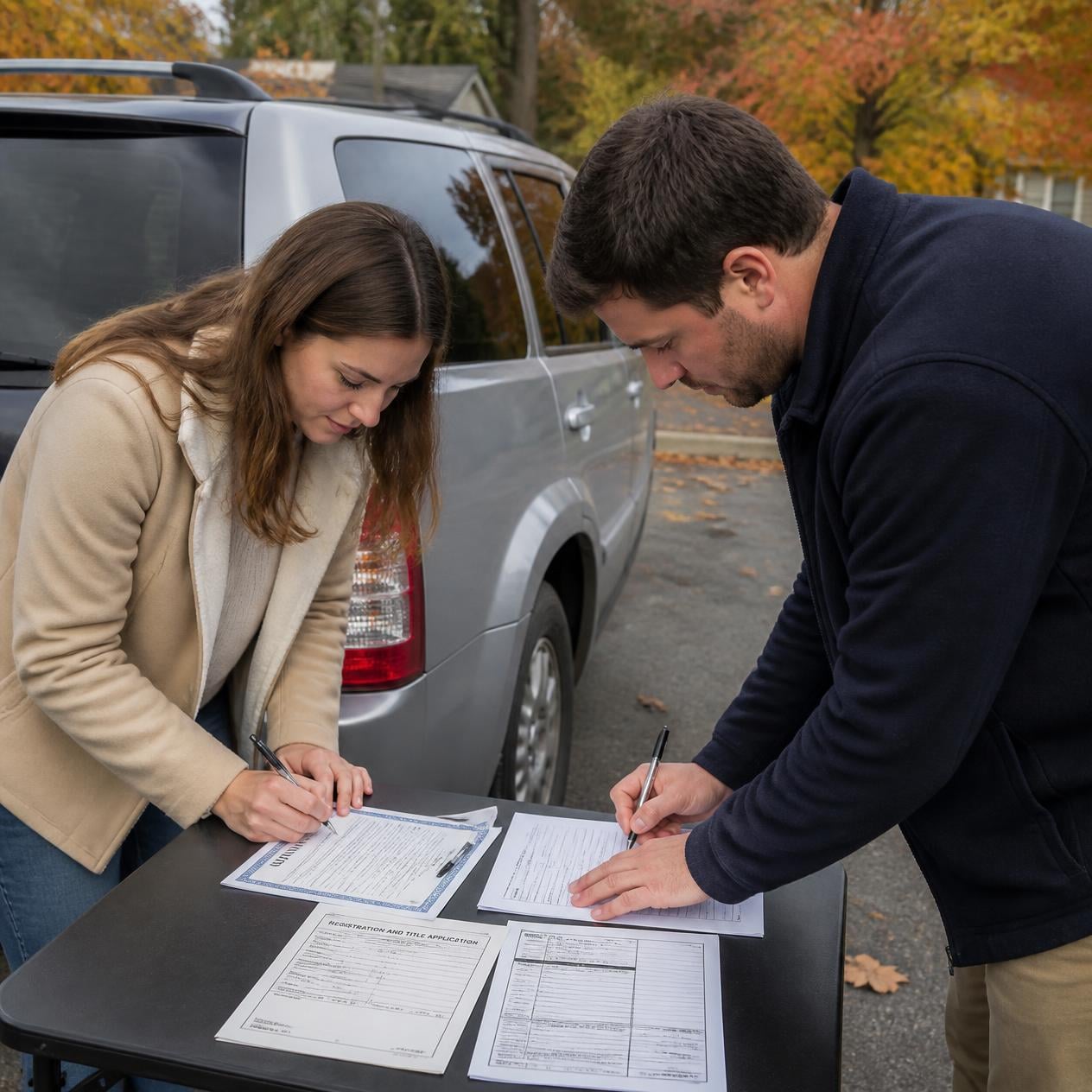
The buyer must apply for title within 10 days, pay 6.25% sales tax, obtain an insurance-stamped Registration and Title Application, and complete a Massachusetts inspection after registration.
Massachusetts Bill of Sale Quick Facts
Question | Massachusetts Rule |
Is a separate bill of sale always required? | No |
When is it specifically needed? | Title-exempt vehicle or title without sale-price field |
Main application | Registration and Title Application |
Insurance requirement | Application completed, stamped and signed by licensed Massachusetts insurer |
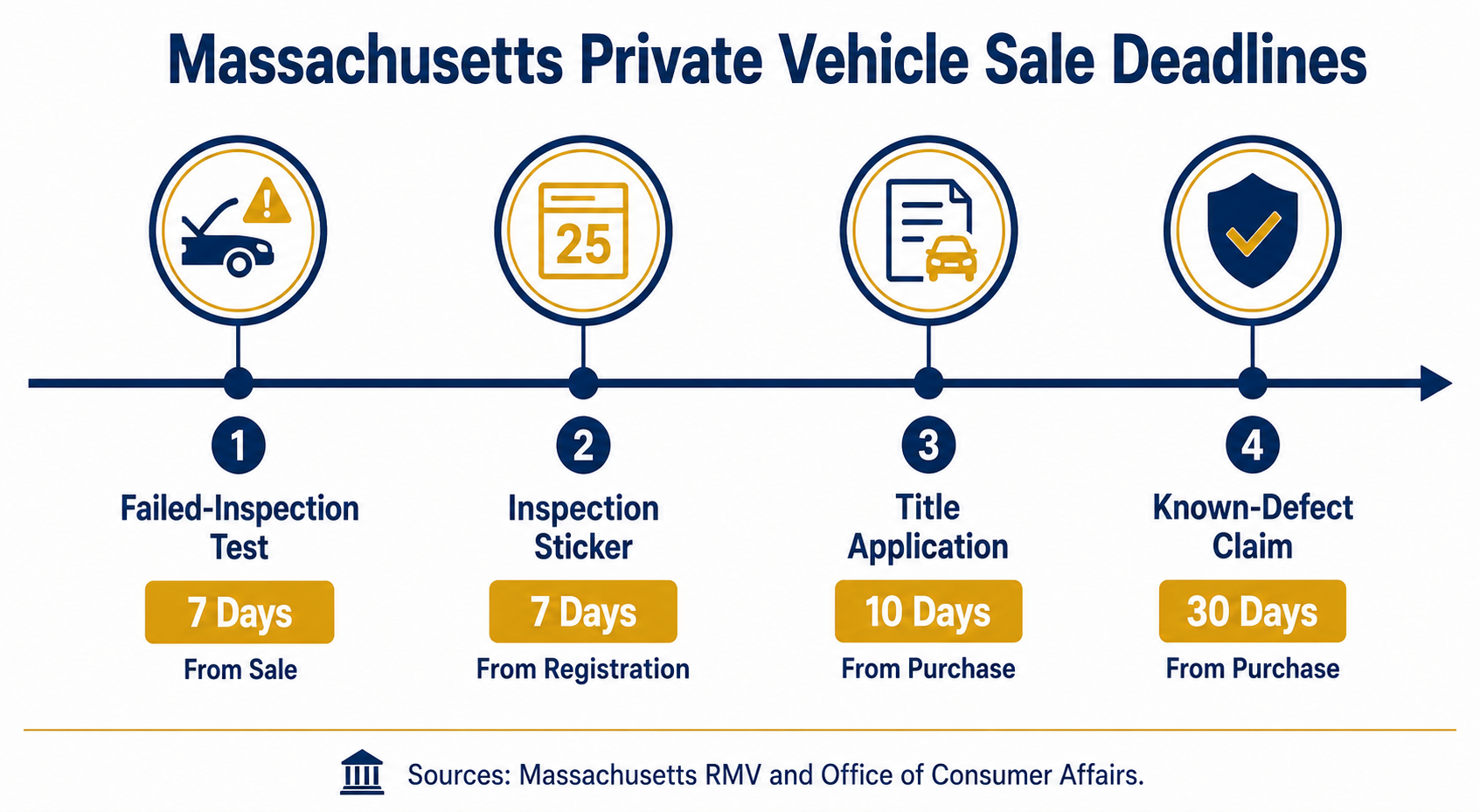
Buyer’s title deadline | 10 days |
Sales tax | 6.25% |
Title fee | $75 |
Standard passenger registration | $60 |
Registration transfer | $25 |
Inspection after registration | Within seven days |
Private-sale known-defect claim | Up to 30 days when requirements are met |
Failed-inspection protection | Inspection within seven days of sale |
These rules are published by the Massachusetts Registry of Motor Vehicles, the Massachusetts Department of Revenue, and the Office of Consumer Affairs and Business Regulation. (Massachusetts Government)
When Is a Massachusetts Bill of Sale Required?
A separate bill of sale is required when:
The vehicle is exempt from title because of age and the buyer uses the previous registration as proof of ownership.
The assigned title does not contain a space for the sale price.
Additional written evidence of the transaction is needed.
For an age-exempt vehicle, the buyer generally submits the previous owner’s registration and bill of sale. For a titled vehicle, the title should show the date, mileage, price, buyer, seller and signatures. (Massachusetts Government)

What Should a Massachusetts Bill of Sale Include?
Include:
Buyer’s and seller’s legal names and addresses.
Vehicle year, make, model and VIN.
Purchase price.
Date and time of sale.
Odometer reading.
Vehicle-condition statements.
Buyer’s and seller’s signatures.
Massachusetts private-sale guidance recommends keeping a proper title and bill of sale because they help establish the terms of the transaction and support a later consumer claim. (Massachusetts Government)
Does a Massachusetts Bill of Sale Need to Be Notarized?
The RMV’s ordinary private-sale checklist does not require a standard bill of sale or title assignment to be notarized.
Both the buyer and seller must sign and hand-print their names and date the transfer document. Erasures, whiteout and alterations on the title or ownership document are not accepted. (Massachusetts Government)
What Documents Does the Buyer Need?
Document | Purpose |
Registration and Title Application | Applies for registration and title |
Insurance-agent stamp and signature | Confirms active Massachusetts coverage |
Assigned certificate of title | Transfers ownership of a titled vehicle |
Previous registration and bill of sale | Used for an age-exempt vehicle |
Lienholder information | Records an active loan |
Sales-tax or exemption documents | Calculates or removes tax |
Identity documents and fees | Complete the RMV transaction |
The buyer must first obtain active Massachusetts insurance and have a licensed insurance agent complete, stamp and sign the application. (Massachusetts Government)
What Is the Massachusetts Title Deadline?
“By law, you must apply for a certificate of title for a motor vehicle or trailer … within 10 days of purchase.”
— Massachusetts Registry of Motor Vehicles
The title fee is $75. After the transaction is approved, the title is generally mailed within approximately six to eight weeks. (Massachusetts Government)
How Is Massachusetts Sales Tax Calculated?
The private-sale tax rate is 6.25%.
The tax is calculated using the greater of:
The actual purchase price.
The clean trade-in value recognized by the RMV.
A private-party buyer does not receive a trade-in credit against the taxable amount. Gift and qualifying family transfers may be exempt when the required Department of Revenue form is submitted. (Massachusetts Government)
What Fees Apply?
Charge | Current Amount |
Certificate of title | $75 |
Standard passenger registration | $60 |
Registration transfer | $25 |
Sales tax | 6.25% |
Gift transfer fee | $25, when applicable |
Annual municipal excise tax | Varies |
Registration fees can vary by plate type. Massachusetts also generates an annual excise-tax bill for active registrations, payable to the city or town where the vehicle is principally garaged. (Massachusetts Government)
What Happens to Massachusetts License Plates?
Massachusetts does not issue temporary registration plates for ordinary private purchases.
A buyer who already owns a registered vehicle may qualify to transfer the existing registration and plates during a seven-calendar-day grace period after disposing of the previous vehicle. The rule applies only when statutory conditions are met, including:
The owner is at least 18.
The replacement is the same vehicle type with the same number of wheels.
The previous vehicle has been disposed of.
Transfer documents are carried in the replacement vehicle.
The existing plates are attached to the replacement vehicle.
There is no seven-day plate-transfer grace period when the buyer did not already have an eligible registered vehicle. (Massachusetts Government)
When Must the Vehicle Be Inspected?
The buyer must obtain a Massachusetts inspection sticker within seven days after the registration date. (Massachusetts Government)
A separate consumer-protection rule uses the sale date, not the registration date. A buyer may be able to cancel the sale when:
The vehicle fails inspection within seven days after the sale.
The necessary safety-related repair cost exceeds 10% of the purchase price.
The buyer completes the required cancellation steps within 14 days.
These deadlines should not be confused with the seven-day inspection-after-registration requirement. (Massachusetts Government)

What Private-Sale Consumer Protections Apply?
Massachusetts requires a private seller to disclose known defects that impair safety or substantially impair use.
A buyer may be able to cancel the sale within 30 days when the buyer proves:
- The vehicle had a qualifying defect.
- The seller knew about the defect.
- The seller failed to disclose it.
The law applies regardless of the vehicle’s price or mileage. A person selling more than three vehicles in a one-year period is treated as a dealer and must obtain the required municipal dealer licence. (Massachusetts Government)
How Do Gift and Family Transfers Work?
Massachusetts uses two main tax-exemption forms:
MVU-26: Qualifying family transfer.
MVU-24: Vehicle transferred as a gift.
Qualifying family relationships include parent, child, spouse and sibling. Transfers from grandparents, cousins, aunts and uncles do not qualify under the family exemption listed by Massachusetts. A gift transfer carries a non-refundable $25 gift-transfer fee in addition to applicable title and registration fees. (Massachusetts Government)
How to Complete a Massachusetts Private Sale
- Verify the title, VIN, mileage and lien status.
- Complete the title assignment and bill of sale when required.
- Obtain active Massachusetts insurance.
- Have the insurer complete and stamp the Registration and Title Application.
- Apply for title within 10 days and pay the 6.25% tax.
- Obtain registration or complete an eligible plate transfer.
- Have the vehicle inspected within seven days after registration.
Common Massachusetts Mistakes
Missing the 10-day title deadline.
Failing to obtain the insurer’s stamp on the application.
Omitting a bill of sale when the title lacks a price section.
Using whiteout or making alterations on the title.
Assuming every buyer receives a seven-day plate grace period.
Confusing the two different seven-day inspection deadlines.
Failing to disclose a known serious defect.