
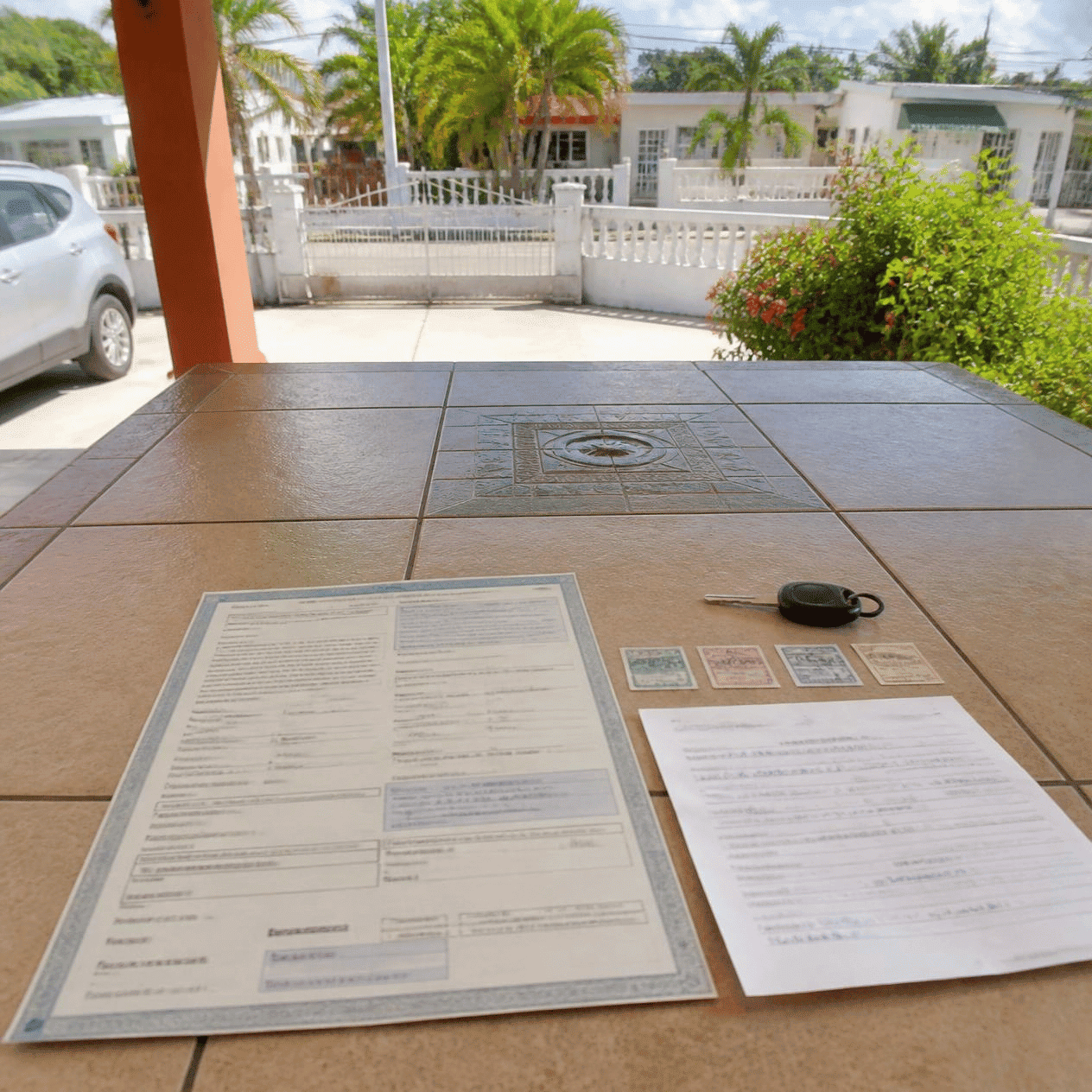
Bill of Sale Sep 22, 2026
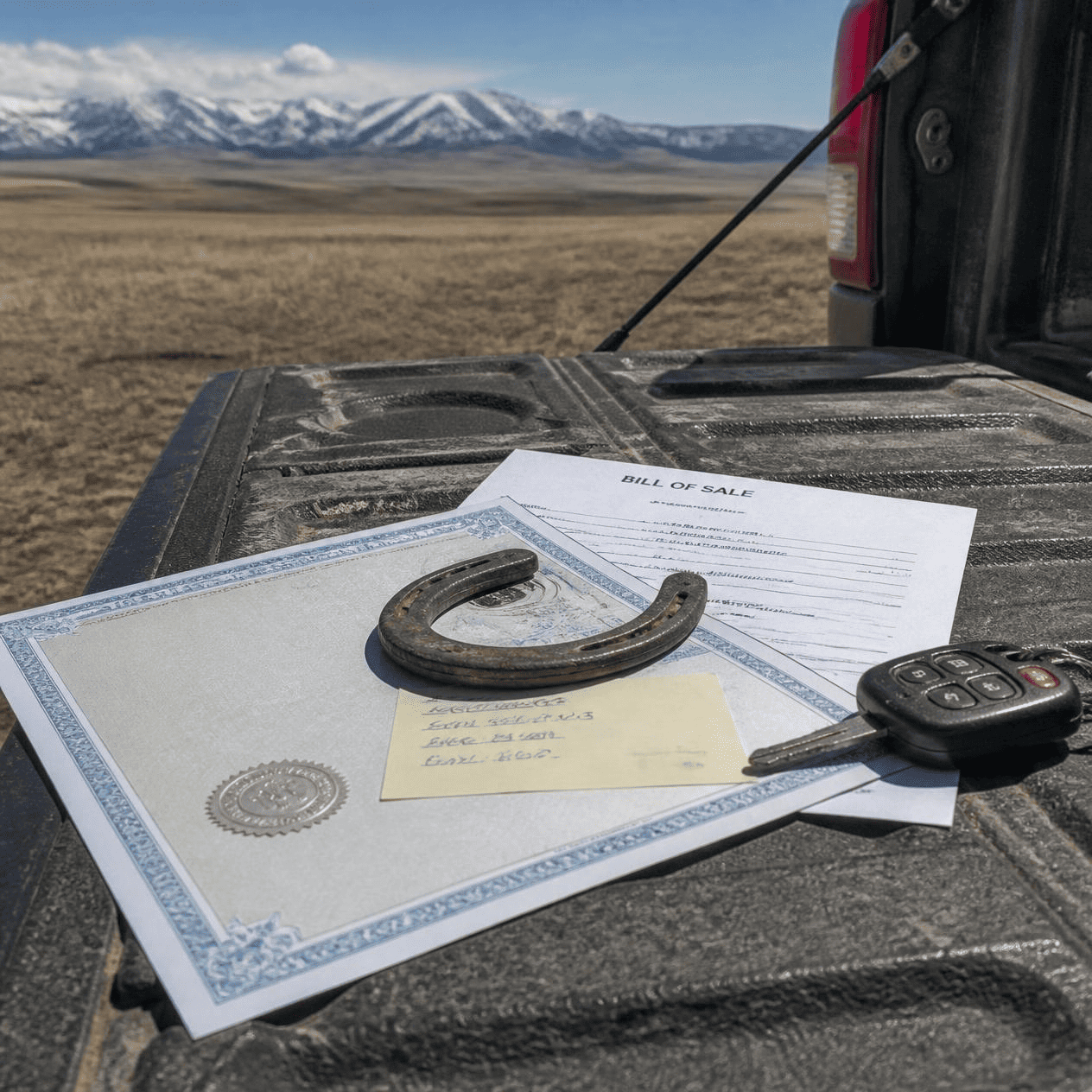
Maine requires a signed bill of sale when registering a passenger vehicle purchased in a private sale. The buyer must also provide the assigned title when the vehicle is subject to Maine’s title requirement, proof of insurance, the municipal excise-tax receipt, and payment of the 5.5% sales tax.
For a simple written record of the transaction, buyers and sellers can use KarKiosk’s free bill of sale PDF and keep a signed copy with the vehicle paperwork.
As of January 1, 2026, model-year 2001 and newer vehicles require a Maine title.
Maine Bill of Sale Quick Facts
Question | Maine Rule |
Is a bill of sale required? | Yes, for private-sale registration |
Official form | Maine Motor Vehicle Bill of Sale |
Notarization | Not required for the standard form |
Title requirement in 2026 | Model-year 2001 and newer vehicles |
State sales tax | 5.5% of purchase price |
Title application fee | $33 |
Standard passenger registration | $35 |
Municipal excise tax | Based on original MSRP and vehicle age |
License plates | Retained by seller and transferable when eligible |
Safety inspection | Required annually |
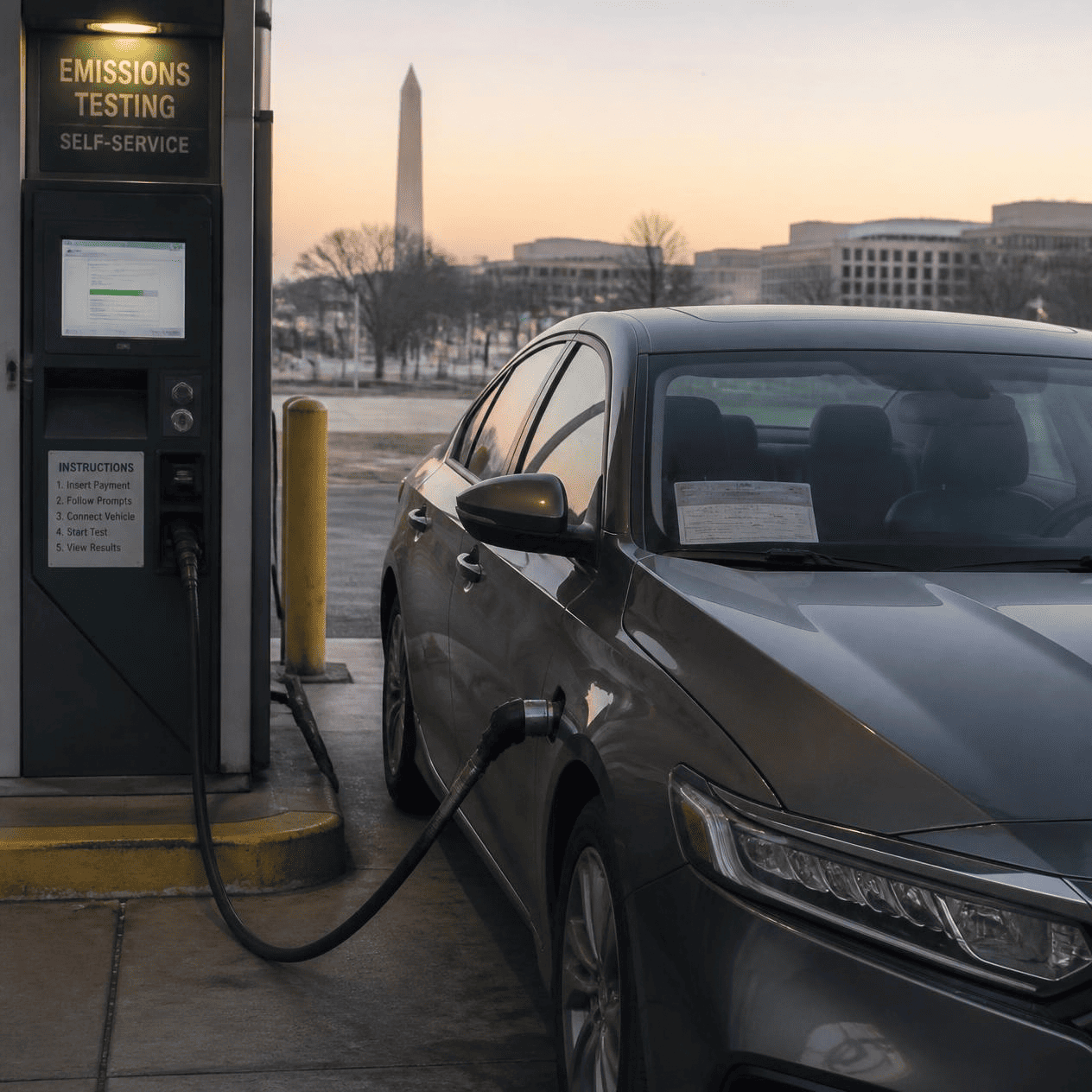
Cumberland County emissions test | Required |
Transit permit | Route-limited and valid for no more than 10 days |
These rules are published by the Maine Bureau of Motor Vehicles, Maine Revenue Services, and the Maine State Police. (Maine)
Is a Bill of Sale Required in Maine?
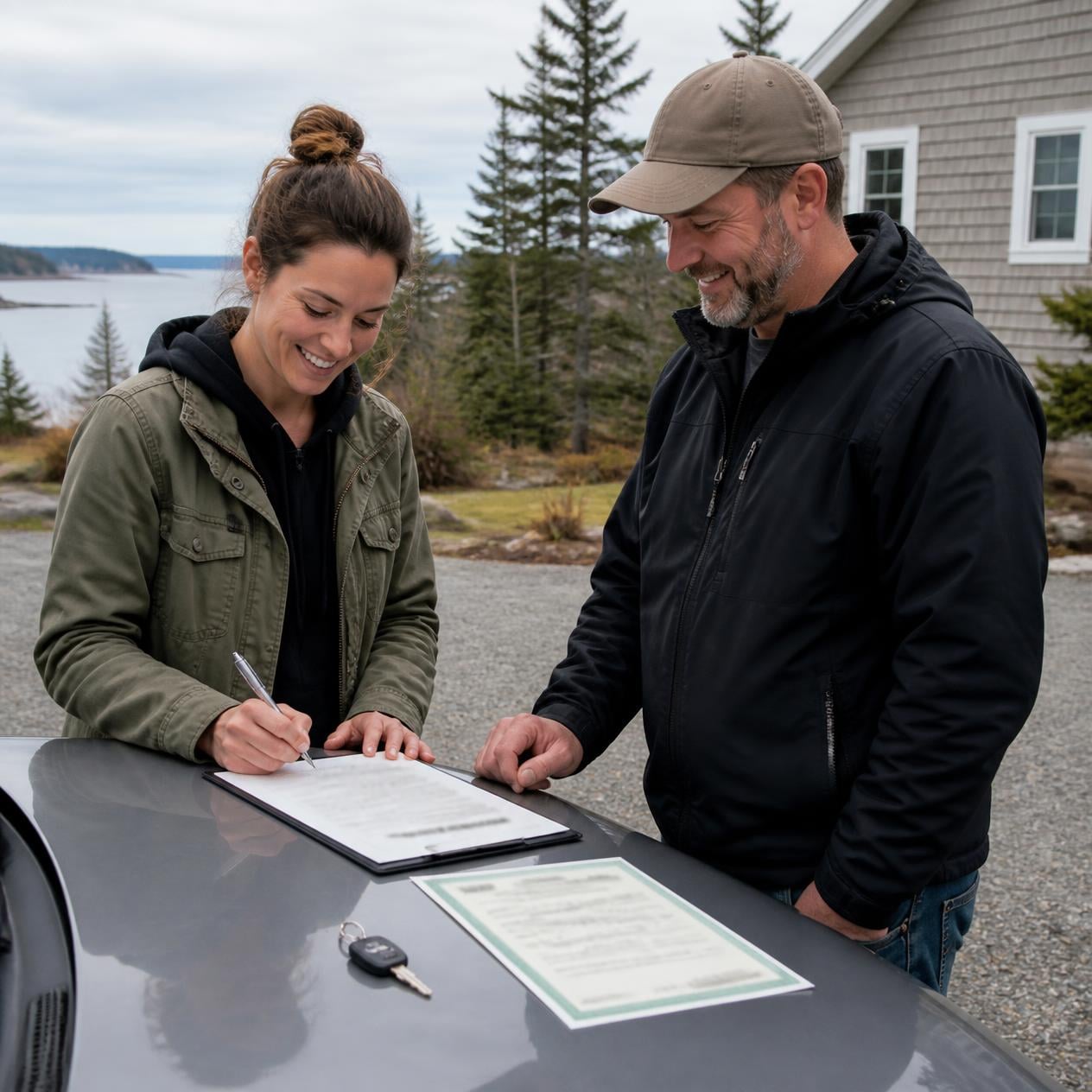
Yes. Maine BMV lists a signed bill of sale as one of the documents required to register a passenger vehicle purchased from a private seller.
The state publishes an official Maine Motor Vehicle Bill of Sale. (Maine)
The form records:
Buyer’s and seller’s names and addresses.
Vehicle year, make, model, body style and color.
Full VIN.
Purchase price and sale date.
Odometer reading and mileage status.
Lien information.
Buyer’s and seller’s signatures.
Does a Maine Bill of Sale Need to Be Notarized?
No general notarization requirement appears on Maine’s standard private-sale checklist, and the official Motor Vehicle Bill of Sale does not contain a notary section.
Both parties should sign and date the document. Special transactions involving an estate, court order, power of attorney, bonded ownership claim or disputed title may require additional documents.
What Documents Does the Maine Buyer Need?
Required Document | Purpose |
Signed bill of sale | Records the private transaction |
Assigned title | Required for vehicles subject to title law |
Proof of insurance | Required for registration |
Excise-tax receipt | Proves municipal excise tax was paid |
Registration application copies | Submitted during registration |
Payment for sales tax | 5.5% of purchase price |
Registration and title fees | Completes the BMV transaction |
The buyer normally pays the municipal excise tax at the town office first. If the municipality does not issue registrations, the buyer can complete the registration at a BMV branch after paying the excise tax locally. (Maine)
Which Vehicles Need a Maine Title in 2026?
Maine uses a rolling 25-year title requirement.
As of January 1, 2026, model-year 2001 and newer vehicles require a title.
As of January 1, 2027, model-year 2002 and newer vehicles will require a title.
A bill of sale does not replace an assigned title when a title is required. (Maine)
What Taxes and Fees Apply?
Charge | Current Amount |
Maine sales tax | 5.5% of purchase price |
Title application | $33 |
Standard passenger registration | $35 |
Municipal excise tax | Varies |
Eligible plate transfer | $8 |
Transit permit | $12 or $25, depending on type |
Maine BMV collects the 5.5% sales tax and title application fee as part of the private-sale registration process. Standard passenger registration is $35. (Maine)
How Is Maine Excise Tax Calculated?
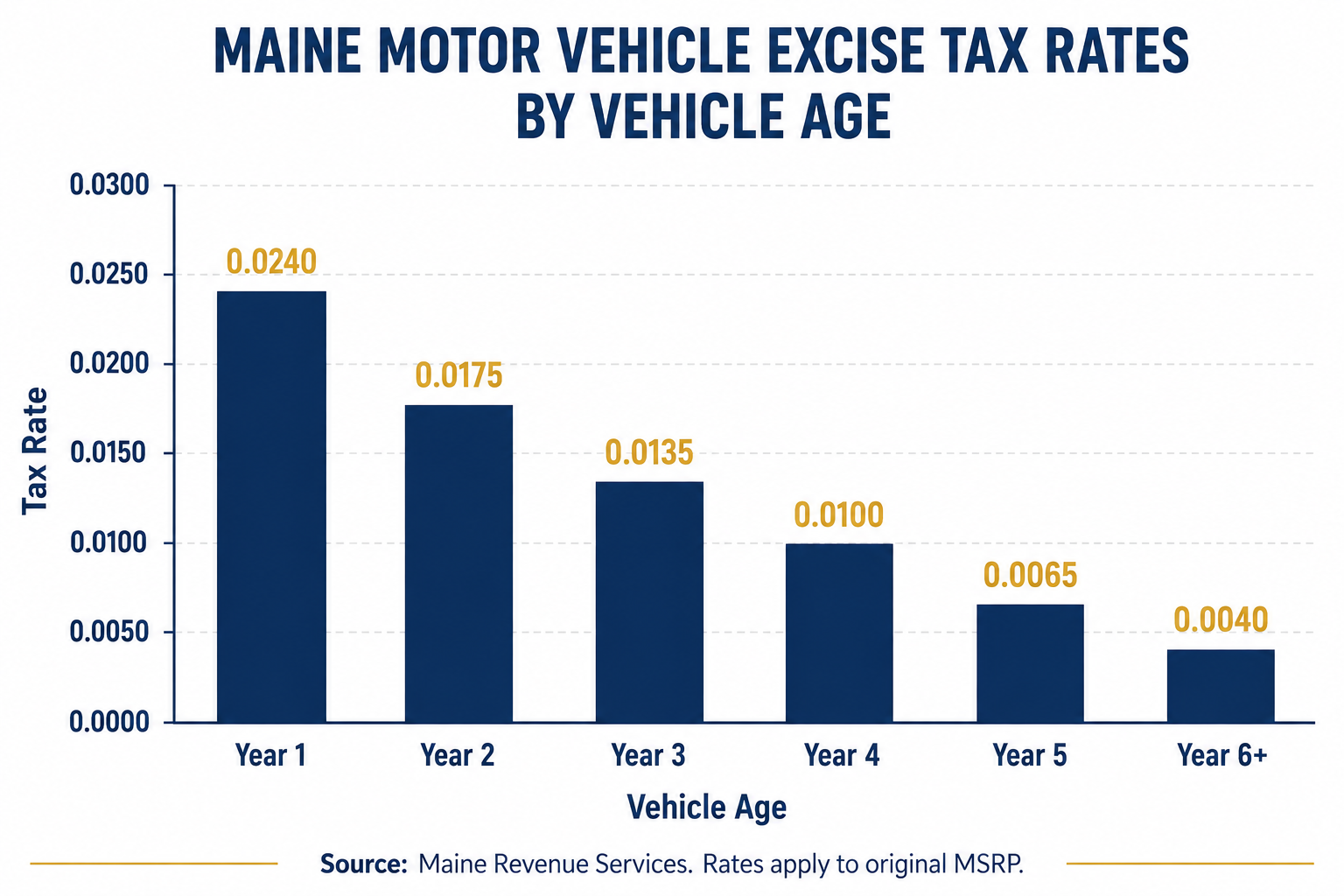
Maine motor vehicle excise tax is paid annually before registration. It is based on the manufacturer’s suggested retail price when the vehicle was new and the vehicle’s age—not the amount the buyer paid for the used vehicle. (Maine)
Vehicle Year | Excise Rate Applied to Original MSRP |
Year 1 | 0.0240 |
Year 2 | 0.0175 |
Year 3 | 0.0135 |
Year 4 | 0.0100 |
Year 5 | 0.0065 |
Year 6 and later | 0.0040 |
Maine Revenue Services gives the example of a three-year-old vehicle with an original MSRP of $19,500. Its excise tax would be $263.25. (Maine)
What Happens to Maine License Plates?
The seller retains the plates rather than leaving them on the sold vehicle.
A seller who registers another vehicle during the same registration year may transfer the plates for $8 when the registration fee is the same. When the replacement vehicle has a higher registration fee, the seller must also pay the difference. (legislature.maine.gov)
The buyer should not drive using the seller’s plate.
Is There a Maine Private-Sale Grace Period?
Maine BMV’s private-sale registration instructions do not publish a broad grace period allowing the buyer to use an unregistered vehicle after purchase.
The buyer should register the vehicle before normal road use. When the vehicle only needs to be moved from one place to another, an eligible route-specific transit permit may be available. This conclusion is based on the BMV’s registration and transit-permit instructions. (Maine)
Do not confuse this with Maine’s separate 30-day deadline for new residents converting existing out-of-state registrations.
How Does a Maine Transit Permit Work?
A temporary registration permit is for moving the vehicle over an approved route. It is not a substitute for normal registration.
A permit:
May be issued for a one-way or qualifying round trip.
Cannot be valid for more than 10 days.
Must remain in the vehicle.
Can be used only on the stated route.
Costs $12 or $25, depending on permit type.
Operating outside the approved route can result in a traffic infraction. (Maine)
What Inspections Are Required?
“Maine law requires all motor vehicles to undergo a safety inspection once a year.”
— Maine State Police
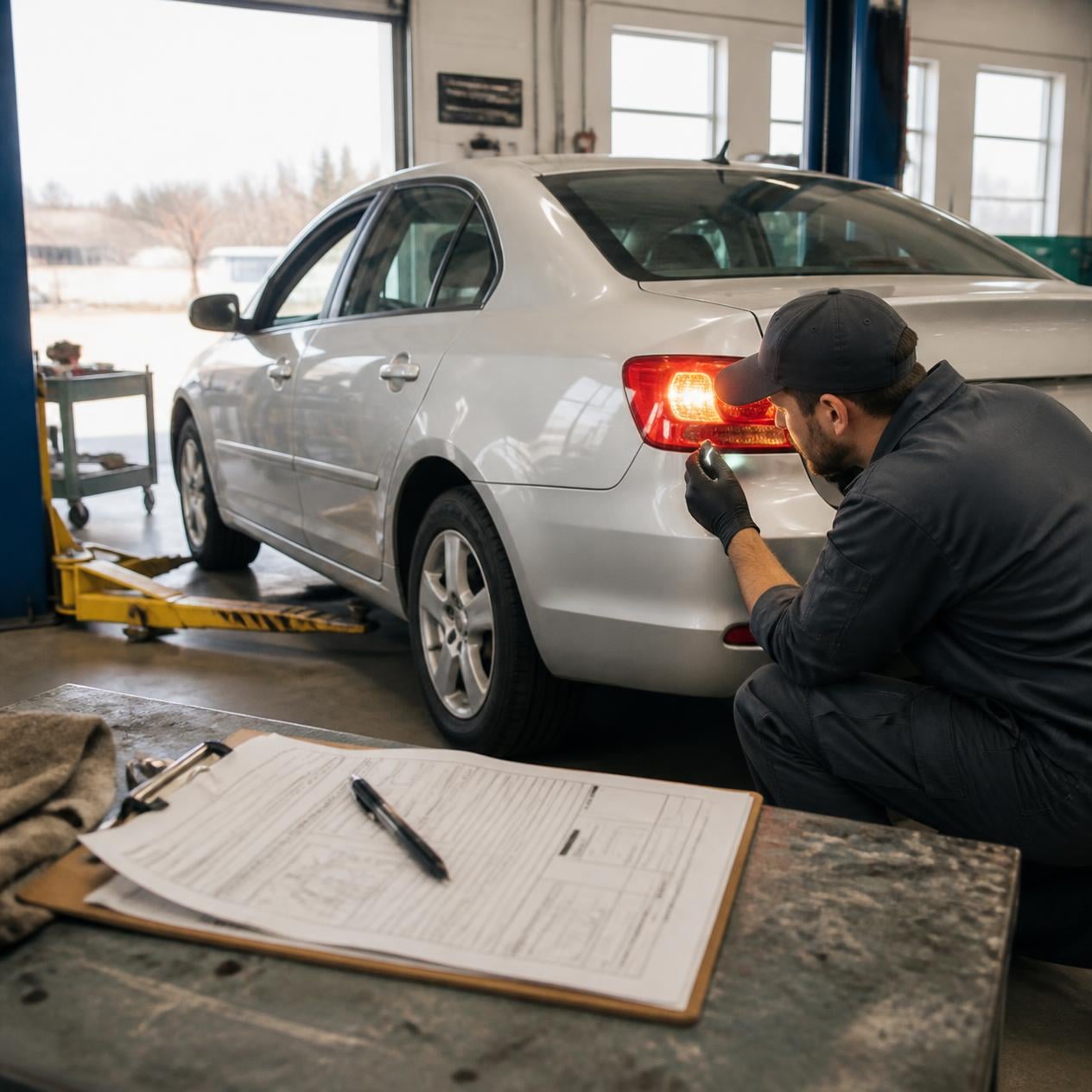
Vehicles registered in Cumberland County must also undergo an emissions test. Maine’s Motor Vehicle Inspection Unit regulates more than 2,600 stations and 8,000 inspection technicians and handles nearly 1.3 million inspection stickers annually. (Maine)
How to Complete a Maine Private Vehicle Sale
Verify the seller’s name and VIN on the title.
Complete the title assignment when the vehicle requires a title.
Complete and sign the Maine bill of sale.
Obtain Maine insurance in the buyer’s name.
Pay the excise tax at the buyer’s town office.
Pay the 5.5% sales tax, title fee and registration fee.
Complete the annual safety inspection and Cumberland County emissions test when applicable.
Common Maine Mistakes
Failing to obtain a signed bill of sale.
Assuming an older vehicle never needs a title.
Calculating excise tax from the used purchase price rather than original MSRP.
Leaving the seller’s plates on the vehicle.
Treating a transit permit as regular registration.
Confusing the new-resident 30-day rule with a private-sale grace period.
Forgetting the annual safety inspection.