
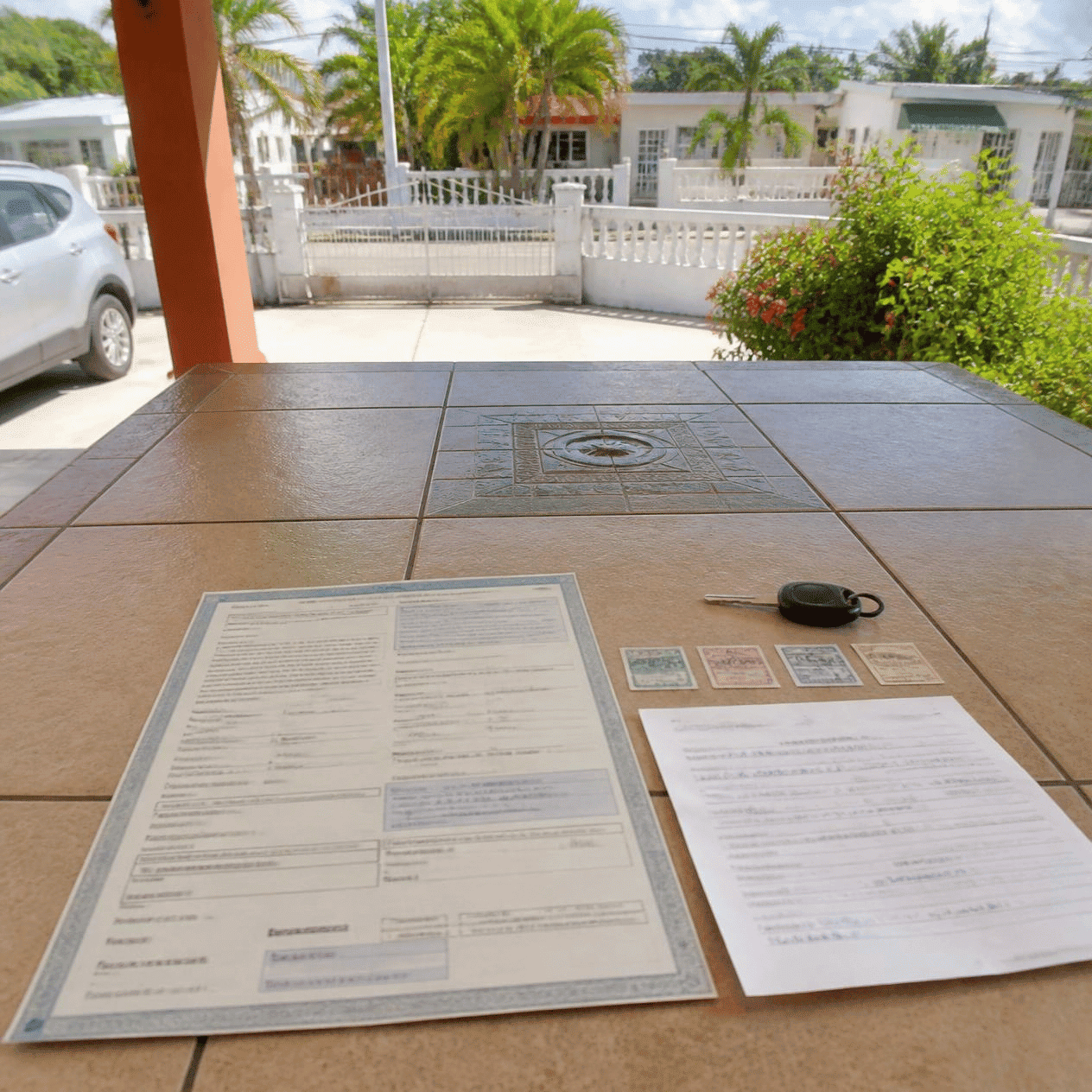
Bill of Sale Sep 22, 2026
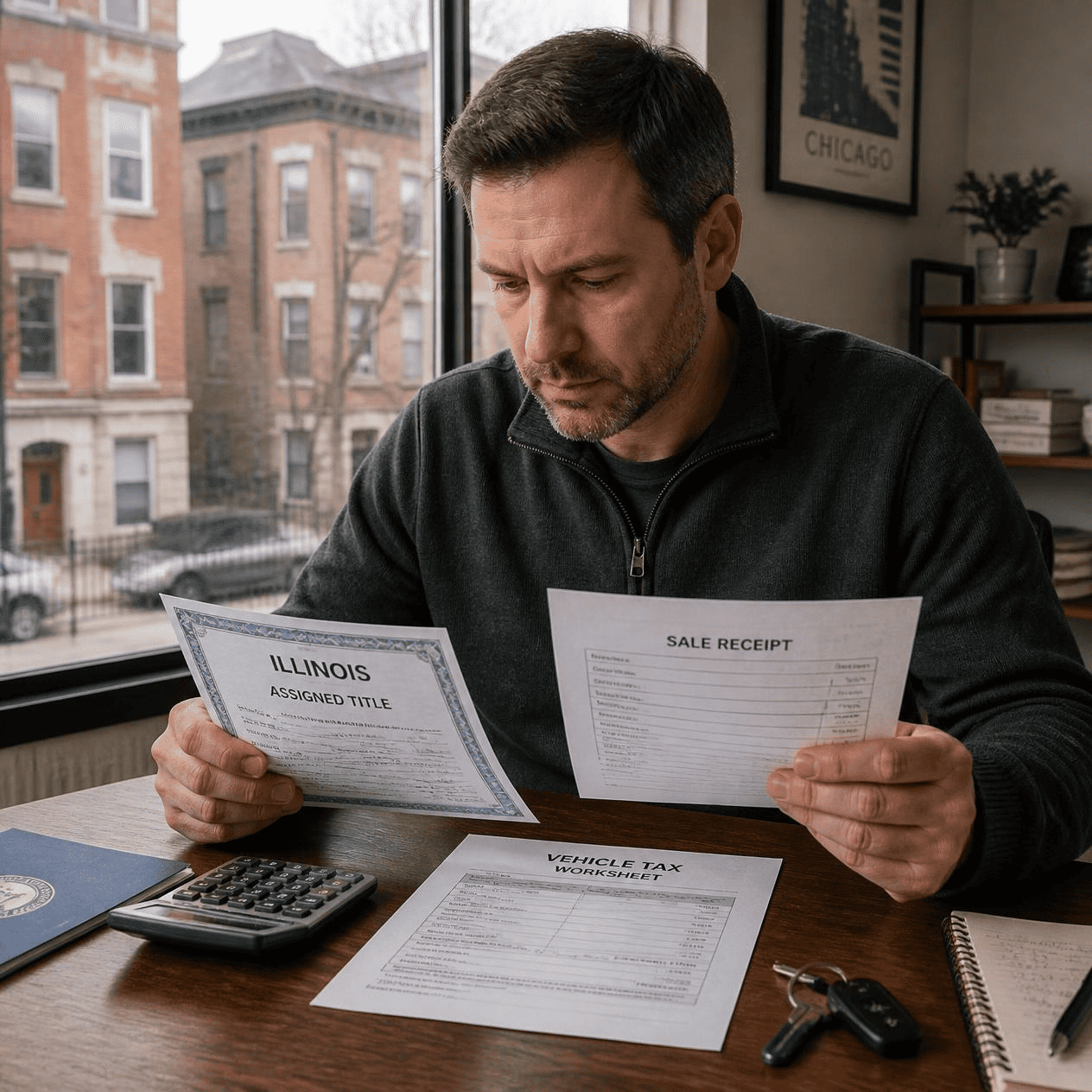
An Illinois bill of sale documents the transaction and supports the purchase price reported for tax, but it does not replace the assigned vehicle title. The buyer generally must apply for title within 20 days after receiving the vehicle and assigned title, while the private-party tax return follows a separate deadline. Record the price, sale date and buyer-seller details using KarKiosk’s free vehicle bill of sale PDF, keeping a signed copy with the ownership documents.
Illinois Bill of Sale Quick Facts
Requirement | Illinois Rule |
Main ownership document | Properly assigned certificate of title |
Title and registration application | VSD 190, Application for Vehicle Transactions |
Private-party tax return | RUT-50 |
Purchase-price verification form | RUT-49, Vehicle Transaction Affidavit |
Buyer’s title deadline | Within 20 days after delivery of the vehicle and assigned title |
Private-party tax deadline | Generally 30 days; the starting date differs for out-of-state acquisitions |
Standard title fee | $165 |
Standard passenger registration | $151 |
Seller’s report | Complete and submit the sale notice immediately |
License plates | Remain with the seller |
The deadlines are established by 625 ILCS 5/3-112, IDOR’s RUT-50 instructions, and the Secretary of State’s Seller’s Report of Sale. Fees follow the Secretary of State’s passenger-plate schedule.
Is a Separate Illinois Bill of Sale Required?
Illinois transfers ordinary vehicle ownership through the assigned title and the buyer’s application. A separate bill of sale supports the transaction rather than replacing that process.
The Illinois Secretary of State’s vehicle-selling instructions tell sellers:
“Prepare a bill of sale for the buyer.”
The instructions also tell the seller to include the sale date and price and retain a copy.
The Illinois Department of Revenue’s RUT-50 instructions explain that attaching a bill of sale or other purchase evidence can help prevent later questions about the reported price. Keep the document even when the title already contains the essential transfer information.
What Should the Illinois Bill of Sale Include?
For a useful transaction record, include:
Buyer and seller: Full legal names and addresses.
Vehicle identification: Year, make, model and complete VIN.
Transaction: Actual selling price and sale date.
Mileage: Odometer reading and any disclosed discrepancy.
Agreed terms: Specific written promises or conditions of sale.
Signatures: Buyer and seller signatures, with a copy for each party.
These details should agree with the title and tax return. Writing one price on the receipt and another on RUT-50 creates inconsistent evidence rather than reducing the tax legally.
Does Illinois Require Notarization?
The Secretary of State’s standard private-sale checklist does not prescribe notarization for an ordinary sale receipt. RUT-49 also uses buyer and seller certifications without a notary block.
Follow separate execution requirements on any out-of-state title, power of attorney or special ownership document. Notarizing a receipt does not correct an incomplete title assignment.
Which Documents Does the Buyer Need?
The Secretary of State’s Apply for Registration and Title guidance and IDOR’s filing instructions identify the core paperwork:
Assigned original title: Properly signed and dated by the seller.
VSD 190: Completed title and registration application.
RUT-50: The private-party vehicle use-tax return.
Sale record: Bill of sale or other purchase-price documentation.
Supporting documents: Applicable lien releases, odometer disclosure and representative-authority documents.
Registration information and payment: Identification, insurance information and the applicable fees.
For an incoming Wisconsin-titled vehicle, the Wisconsin bill of sale and title guide covers the seller’s paperwork. Illinois still requires its own title application and applicable tax filing.
What Are Illinois’s Title and Tax Deadlines?
Title Application: Within 20 Days
Under 625 ILCS 5/3-112(b), the buyer must act promptly and submit the application within 20 days after receiving the vehicle and assigned title.
The deadline concerns submitting the application. It does not mean the new certificate must arrive in the mail within 20 days.
RUT-50: Generally Within 30 Days
IDOR’s RUT-50 instructions distinguish where the vehicle was acquired:
Acquired in Illinois: File within 30 days of acquiring the vehicle.
Acquired outside Illinois: File within 30 days of bringing it into Illinois.
The tax deadline does not extend the earlier title-application requirement. For a normal local purchase, prepare both filings together rather than treating them as unrelated errands.
How Much Tax Applies to an Illinois Private Car Sale?
Illinois does not apply one flat percentage to ordinary private-party vehicle purchases. The Illinois Department of Revenue’s private-party vehicle tax guidance directs buyers to the applicable tax tables.
Under RUT-5 for 2026, the calculation changes at $15,000:
Below $15,000: State tax depends on the vehicle’s model year. A 2020 car purchased for $12,000 produces $165 in state tax.
$15,000 or more: State tax follows purchase-price brackets. A $15,000 purchase produces $850, while a $20,000 purchase produces $1,100.
When there is no stated price, such as a gift or even exchange, the applicable fair market value is used unless a specific exception applies. Certain locations also impose additional private-party vehicle taxes, identified in IDOR’s RUT-6 reference guide.

What Happens if Illinois Questions the Selling Price?
IDOR provides RUT-49, Vehicle Transaction Affidavit, to verify information reported—or missing—on RUT-50.
The buyer and seller complete and sign it. It identifies both parties, the vehicle and the purchase price.
A private vehicle exchange does not create a trade-in deduction on RUT-50. IDOR’s instructions include money, property, credit and services in the value given for a vehicle.
For an unusually low-priced vehicle, retain photographs, repair estimates and the signed sale record explaining its condition. Those records provide context if the transaction is questioned.
Can RUT-50 Be Filed Online?
Yes. IDOR allows filing and electronic payment through MyTax Illinois, or through an approved electronic registration and title service provider.
Print the completed RUT-50 for the Secretary of State. IDOR specifically states that the title and plate request cannot be processed without the printed copy when the return was filed through MyTax Illinois.
For paper filing, obtain an original return. IDOR warns against copying blank RUT-50 forms because each has a unique transaction number.
Which Fees Are Separate From the Vehicle Tax?
The Secretary of State’s Passenger License Plates schedule lists:
$165 for the title plus $151 for standard passenger registration, totaling $316 for a newly acquired vehicle receiving ordinary plates.
That total excludes private-party use tax and any applicable local tax, specialty-plate charge or other transaction-specific cost.
An eligible existing plate transfer follows a different fee calculation. Do not assume every buyer must pay the full new-registration amount.
What Must the Seller Do With the Plates and Sale Notice?
The Secretary of State’s selling instructions require the seller to remove the license plates before delivering the vehicle. The plates belong to the registered owner, not the purchaser.
Complete the notice attached to the title or VSD 703, Seller’s Report of Sale, immediately and submit it to the Secretary of State. Retain the report and a copy of the assigned title.
The report does not transfer the title into the buyer’s name. VSD 703 expressly separates the seller’s notification from the buyer’s application.
When selling to a Missouri resident, the Missouri bill of sale and title guide covers that buyer’s destination-state requirements. The Illinois seller should still remove the Illinois plates and file the sale report.

Does the Car Need an Illinois Emissions Test?
The Illinois EPA Vehicle Emissions Testing Program applies in the Chicago and Metro-East St. Louis testing areas.
Most covered 1996-and-newer gasoline passenger vehicles enter the program after they are four years old. Testing generally follows a two-year cycle, with exemptions depending on the vehicle.
The buyer’s registration location and the vehicle’s compliance record matter. Illinois EPA works with the Secretary of State to deny registration for noncompliant vehicles.
Check testing status before purchase rather than assuming a signed bill of sale clears an emissions-related registration problem.